

Do you hear unfamiliar words or unexpected statements from a politician or celebrity in an image? Slow down. Check again. Remember that it could be deepfake content.
Deepfake, which is a combination of the English words deep learning and fake, refers to images created using artificial intelligence techniques to realistically imitate human faces, movements, and voices.
The Turkish fact-checking platform, teyit.org, has compiled some guidelines for identifying deepfake content, giving examples from Turkish politics.
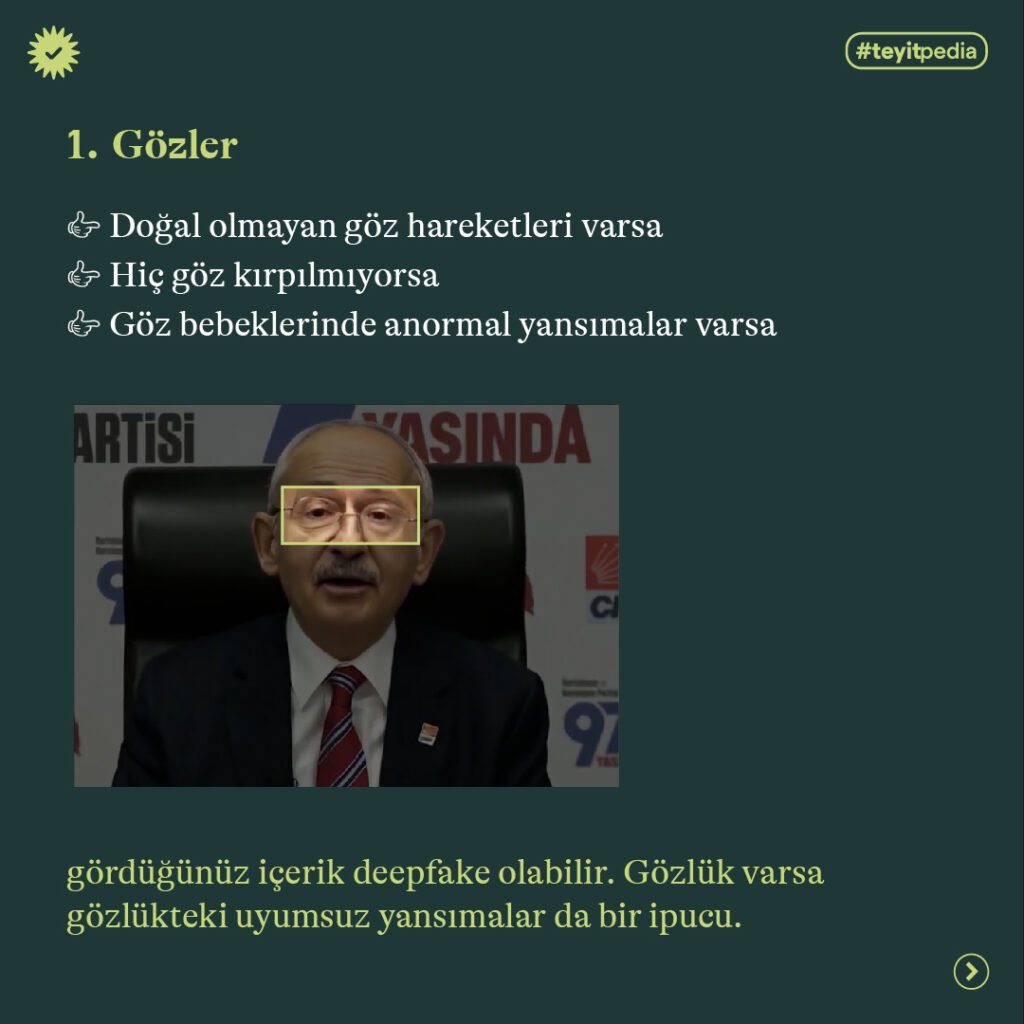
The eyes
Content may be deepfake if:
- has unnatural eye movements
- I can't open or close my eyes.
- there are abnormal reflections in the pupils of the eyes
If we wear glasses, inconsistent reflections on the glasses are also a suspicious clue.
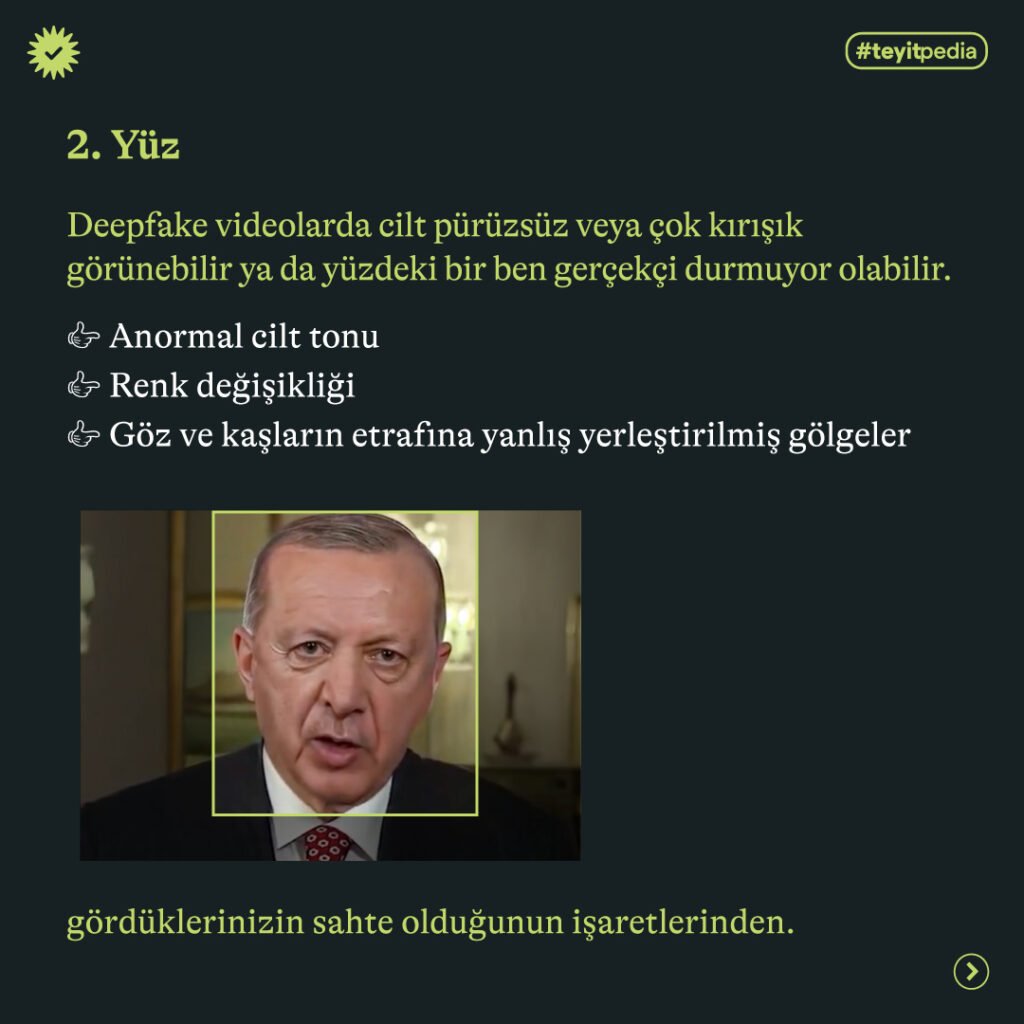
Face
In deepfake videos, skin may appear smooth or very wrinkled, or a mole on the face may not look realistic.
The identifying signs of deepfake content are:
- abnormal skin tone
- color change
- wrong shadows around the eyes and muscles
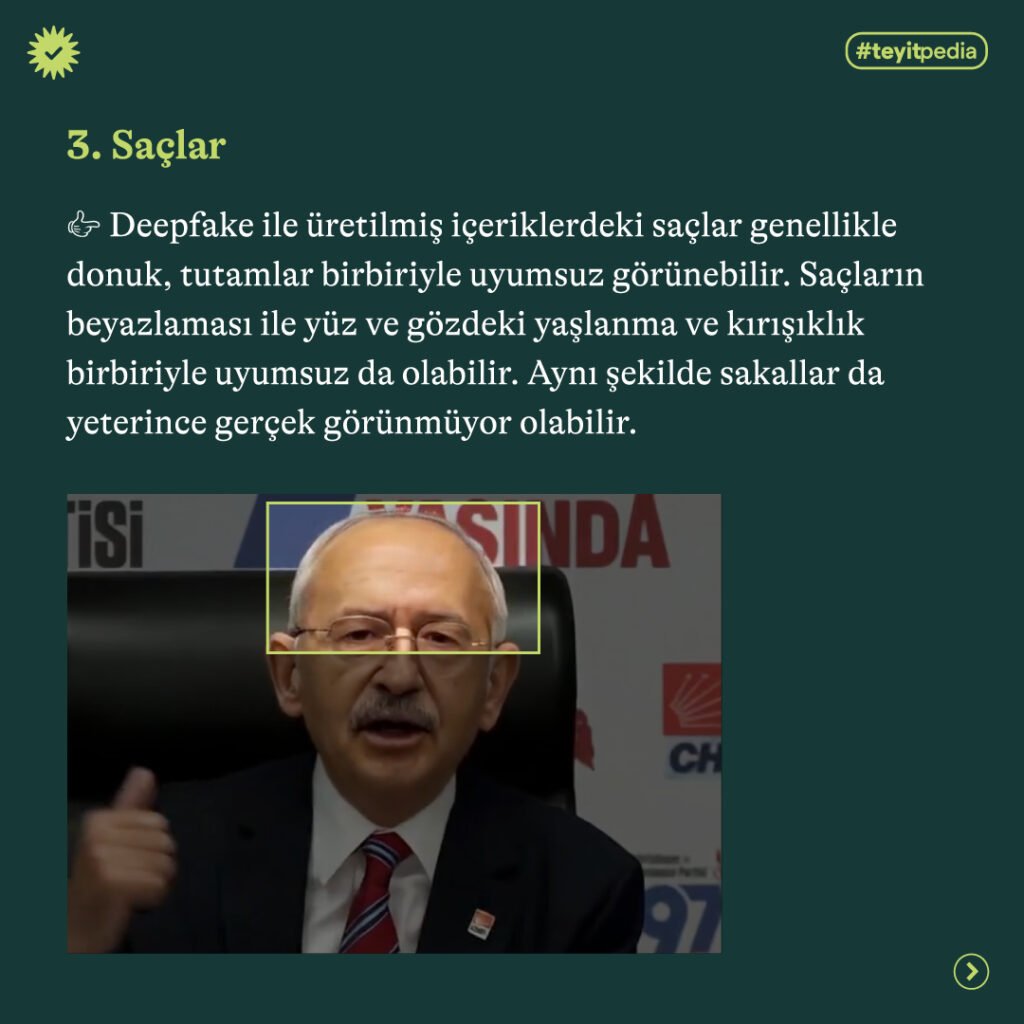
locks
Hair in deepfake content may appear frozen, hair strands may be inconsistent with each other. Hair graying and aging and wrinkles on the face and eyes may also be inconsistent with each other. Also, beards may not look quite realistic.
tooth
Algorithms may not work on odd-numbered teeth, so the lack of an outline of all teeth can be a suspicious clue.
sync
If the person's face in the image does not display emotion in harmony with what they are saying or the words are not consistent with the movement of their lips, the image you are viewing may be deepfake content.

Unstable image or sound
Some characteristics to distinguish fake content:
- robotic voice
- strange pronunciations of words
- background noise
- even the lack of voice

Body or posture
Deepfake technology often focuses on the face rather than the entire body. If one frame is disproportionate or disconnected from another as the person turns or moves their head, it raises suspicions.

Remember that the more famous a person is, the easier it can be to produce near-perfect deepfake content.
source: teyit.org