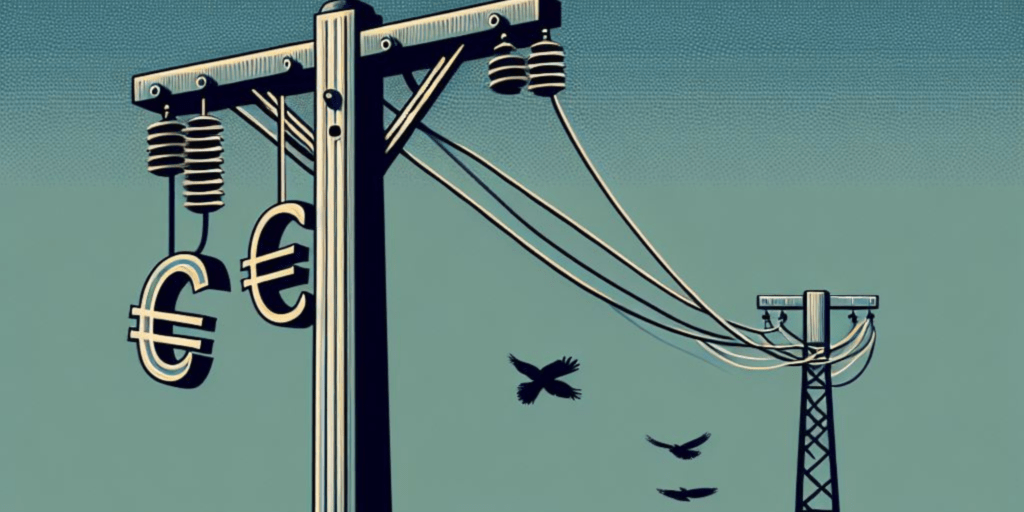

In December, many citizens in Kosovo, mainly through social networks, complained about unaffordable energy bills and even fraud by the Kosovo Electricity Distribution Company (KEDS).
Citizens, according to whom their energy bill in December was double that in November, accused KEDS of rigging the bills and, as a result, the December bills did not reflect their expenses.
"The increase in the value of bills in this winter month is the result of the increase in electricity consumption, especially among consumers who use electricity for heating. Electricity consumption in the amount of more than 800 kWh per month is billed at a higher rate, as shown on each consumer bill." "Another effect of the increase in the value of the bill is that last year in the same period, the Government of Kosovo subsidized consumers who saved electricity," KESCO said in a statement, while the company also published the latest decision of the Energy Regulatory Office on changing tariffs.
Although social media was filled with complaints, Energy Regulatory Office (ERO) said that he has not received any complaints from citizens regarding the reading of this month's bills.
The December bills served as material for political parties and some media outlets to shift the blame to the Kosovo government, even though KEDS and KESCO are private companies that are not under government supervision, and the energy market is regulated by ERO. (see HERE for more)
And by decision of the ERO, the price of energy in Kosovo has increased twice in the last two years. However, citizens may not have noticed the increase because the changes occurred either during the spring season, when consumption is lower, or during periods when energy consumption was subsidized by the Kosovo government. (first update – read HERE; second increase – read HERE)
The increase in energy prices in Kosovo was inevitable due to the global supply chain disruption from the COVID-19 pandemic in 2020 to Russia's invasion of Ukraine. (see HERE), which began on February 24, 2022. As a result of the latter, energy production became 20% more expensive in the first months of the war there. (see HERE).
The electricity crisis in Europe deepened towards mid-2021, mainly due to rising gas prices as a result of the Covid-19 pandemic.. And since Kosovo does not produce enough energy to meet its domestic demands, it must import the difference, which is directly affected by global energy prices.
Kosovo's capacity for electricity production through the Kosovo A and Kosovo B thermal power plants is around 800 megawatts of electricity per hour. While peak winter demand reaches up to 1.300 megawatts per hour. This difference, KEDS imports from abroad according to the price of electricity on the Hungarian HUPX stock exchange. (more broadly HERE)
In August 2021, the price per megawatt on the international stock exchange was 150 euros, while in the same month of the following year the price reached around 430 euros per megawatt. (more broadly HERE).
In February 2022, the Energy Regulatory Office (ERO) approved the first increase in electricity tariffs, affecting household and commercial customers using over 800 kilowatt hours. With the new tariffs, these customers were billed 12.5 cents per kilowatt on the high tariff and 5.9 cents on the low tariff.
To cope with this increase in tariffs for citizens, the Kosovo government had approved a program to subsidize consumers who save electricity. (see NOTIFICATION of Minister Hekuran Murati)
The Minister of Finance, Hekuran Murati, had said that the beneficiaries of this measure are all those citizens who in the coming months (i.e., after the government's decision) would spend less electricity than they had spent in the same months last year.
The electricity subsidy for the months of September, October and November 2022 was provided by the Government of Kosovo, while for December (2022), January, February and March (2023) it was covered by European Union funds.
But the next tariff increase came again in March 2023 - this increase of 15.4%, which was added to the previous increase in 2022.
The Chairman of the Board of ERO, Ymer Fejzullahu, justified this increase in tariffs with a stable supply of electricity. (see Fejzullahu's statement) HERE)
"We consider that if we do not have a stable energy supply, the cost will be many times greater than the proposed percentage. This is the minimum to have 24 hours of electricity," he said on March 30.
Electricity expert, Trim Tërnava, on the television "Dukagjin", said that citizens did not notice the price increase (which occurred on April 1, 2023) since when the tariffs increased, we were in the spring season and consumption was not high.
He says that there was no increase in tariffs from November to December, but that consumption has increased and the first block tariff of 800 megawatts of electricity per hour has been exceeded, after which expensive tariffs are calculated.
The Council for the Protection of Human Rights and Freedoms (KMDLNj) has requested the Prosecutor's Office to launch investigations into suspicions of inflated December invoices. (see the reaction of the KMDLNJ HERE)
Even opposition political parties have demanded the same thing.
So far, the Prosecutor's Office has not made any statement on this matter.
Analytical article by Agon Osmani.