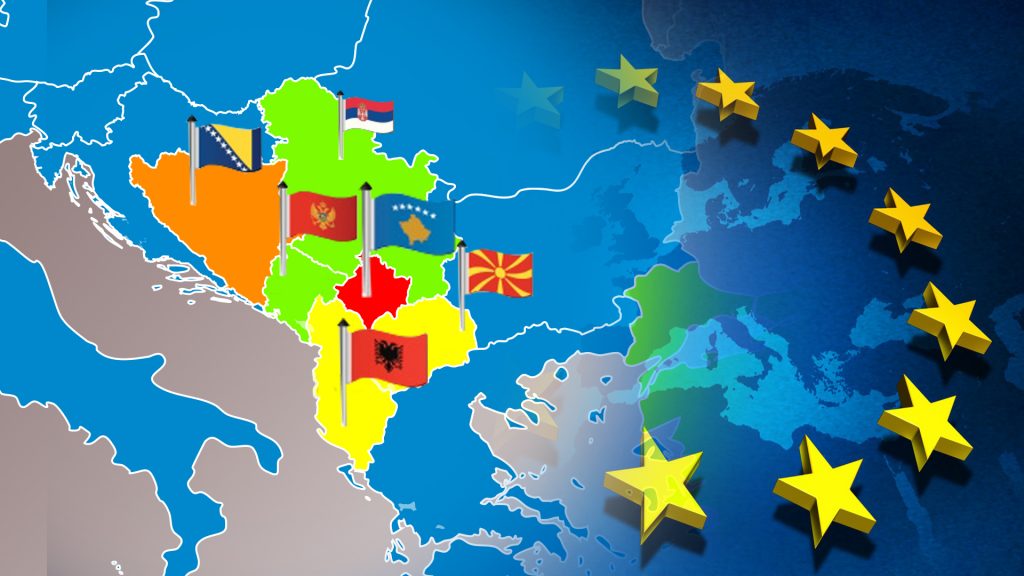

COVID-19 has transformed media and journalism, everywhere. However, depending on the context of the countries, the different impact that the pandemic had on the journalist profession can be understood. In this regional analysis, the findings from the 10 interviews conducted with journalists from four states of the region, Bosnia and Herzegovina, Kosovo, North Macedonia and Albania, will be presented.
The pandemic was experienced differently by journalists in each of these four states, and at the same time, the way they practiced their profession was different, adapting to the situation and circumstances in the respective state.
Applications, an important part of journalists' work methods during the pandemic
The most frequent use of the opportunities offered by technology is one of the common features of journalists in the four countries under review. The various applications became very important parts in their working methods. Such applications have been used by journalists before, but not to such a large extent as during the period when the pandemic appeared, say the interviewees.
Another commonality was the reduction in contacts with sources, due to movement restrictions, and this was highlighted in the case of Kosovo and North Macedonia. However, the possibility that interviews with experts and other important people were more easily conducted thanks to technology is highlighted as a positive. Adriatik Kelmendi, General Director of Klan Kosova, declares that by using technology, they have managed to interview certain people more often, more than they would have managed to interview in a normal situation. They also underline the help from the digital age A2CNN editor-in-chief, Elert Yzeiri and journalist from BiH, Milorad Milojevic.
Despite the movement measures, Editor-in-Chief at Koha Ditore, Brikenda Rexhepi shows that they have not stopped working on the ground by covering border crossings before they are completely closed, quarantines, hospitals, etc., meanwhile, Milojevic highlights some of the difficulties of journalists in Bosnia and Herzegovina, as a result of the restriction of movement, such as the inability to participate in government press conferences.
Mobile journalism – or journalism with the help of a mobile phone, has been one of the solutions made by journalists, due to the circumstances, he says Aleksandar Manasiev, editor-in-chief of VidiVakaThis form of journalism has also been used by the KOHA group, Rexhepi emphasizes.
In terms of institutional transparency and access to public documents, in Bosnia and Herzegovina and Kosovo it is noted that it has been easier when it comes to the pandemic, but difficulties have continued to exist on other topics. Despite this, journalists in BiH managed to uncover two scandals, says Darko Omeragic, referring to the scandal of purchasing respirators and the affair of purchasing a mobile hospital tent. Meanwhile, in Albania, Aleksandër Çipa from the UGSH emphasizes the fact that the volume of data has increased, but this has not increased transparency and informing the public with the type of information that is of interest. The closure of institutions is also emphasized Goran Lefkov, editor at Inbox7.
Interviewees confirm the increased interest of citizens in information, but hesitate to conclude that this implies increased credibility. Gentiana Begolli from AGK stresses that the audience's trust in the media in Kosovo has remained unchanged, while in the case of Albania, Çipa says that in addition to the multiplication of the audience, distrust of online media has also increased. Manasiev says that in North Macedonia, the level of trust has remained as it was, low, while Milojevic emphasizes that citizens had more trust in the media only in cases when it was reported about the coronavirus.
COVID-19, the cause of job loss and reduced wages in all four states
During the pandemic crisis, journalists are among the people most at risk of infection. The nature of a journalist's work places them in such a position, and this increases the need for meeting the necessary working conditions and appropriate support from media companies themselves.
In the case of the four countries included in the analysis, interviewees indicate that the necessary steps have been taken to ensure basic anti-coronavirus equipment, such as the use of masks, gloves and disinfectants. A 12-point protocol has been implemented in Klan Kosova, which defines the manner of behavior, relaxations in working hours, measures for the release of certain categories of workers, etc., says the General Director, Kelmendi, who also adds that, however, there were journalists from some media outlets who continued to work as usual, without protective measures. Centro shows that during this period, the AGK has come to the aid of journalists by providing over 300 packages of gloves, masks and disinfectants. Psychological counseling would also be a necessary form of support for journalists, but this has been lacking in all four countries.
In addition to protective measures and support for journalists, another important issue is the sustainability of the media and the job security of journalists. COVID-19 has led to journalists losing their jobs, while others have to continue working with lower wages. In all four countries, journalists were left without contracts, including Omeragic, who was among 10 employees who left the newspaper Oslobođenje. Omeragic says he is surprised by the departure of journalists from some media outlets, especially, he emphasizes, good journalists. In Kosovo, the newspaper Zëri was closed due to the pandemic and 22 employees were left unemployed. In Albania, Cipa says that about 12% of media workers were affected, while 47 journalists lost their jobs. In North Macedonia, DuridanskIt shows that five journalists were left without work. The phenomenon of salary cuts was widespread in all four countries, while unlike Kosovo, in Albania and North Macedonia there were no media closures during this period.
Financial pressure, fear of losing one's job, directly facing the risk of being infected were some of the most affected aspects of journalists' work and life. President of UGSH, Cipa emphasizes that in Albania so far there are 5 confirmed cases of journalists affected by the virus, as well as members of their families.
The explosion of disinformation and the lack of a strategy to combat it
Since the outbreak of the pandemic, there has been an explosion of misinformation related to COVID-19. The great interest of citizens to get more information about the coronavirus resulted in an increase in the distribution of misinformation, especially on social media.
In the countries of the region, there is no strategy on how to combat disinformation, however, there is no shortage of initiatives, whether from non-governmental organizations or certain media outlets, which attempt to directly combat disinformation that goes viral on social media. Duridanski from the Independent Union of Journalists and Media Workers believes that when the media does its job, then there is no need for a "special force" to fight disinformation. That professionalism is the best method to fight disinformation is also said by Yzeiri, Kelmendi and Milojevic.
The sources of disinformation vary and the motives for spreading a disinformation are different. What is common in all four countries is that social media is seen as the main source of disinformation. Then, people who spread misinformation are different from those who just want to gain attention, as he says Kelmendi, and to those who exploit the situation for certain political or business interests, as he points out Omeragic.
Another common point in all four countries is the fact that the intensity of disinformation has increased since the outbreak of the pandemic. This can be considered natural because people's interest in the topic of the coronavirus has pushed even those who deal with misinformation to focus on this crisis as the main topic of these months. Kelmendi and Milojevic they emphasize that the beginning was critical, however, over time, the number of misinformation also decreased. In Kosovo, in addition to the health crisis, the society has also experienced a political crisis, however, in terms of the distribution of misinformation, those related to COVID-19 have dominated. Meanwhile, in Bosnia and Herzegovina, disinformation about the coronavirus was also used to distract attention, due to the fact that no information was published about controversial public procurements, Milojevic points out.
Freedom of the media was threatened the most in Albania and Bosnia
Another important aspect of journalism that is explored in this analysis is the freedom of information and the journalist. The halving of the staff has also affected the reduction of the possibility of access to public information and documents, emphasize Begolli and Duridanski. Chipa adds that the centralization of official information has multiplied, highlighting once again the difficulties faced by journalists in Albania, due to institutions that hardly provide journalists with access to public documents. Meanwhile, Kelmendi points out that one of the positive things of the pandemic is the increase in media-institutional cooperation in Kosovo. In the case of Bosnia, Milojevic mentions how it has been difficult to access other important information, unless it was related to the pandemic.
Media freedom was most threatened in Albania and Bosnia and Herzegovina. Cipa shows how in Albania there have been penalties for media and journalists under the pretext of not respecting social distancing in editorial offices and television studios. He also mentions the fine against TV Ora and underlines that there have been over four cases of violence and violation of the physical integrity of journalists who have attempted to report from hospital and public health facilities on pandemic cases and situations. Meanwhile, Yzeir also mentions Prime Minister Rama's calls to the Albanian public to stay away from the media. In Bosnia and Herzegovina, there was state interference in freedom of expression through a decree that addressed the spread of panic, but which was later withdrawn, after public reaction and international organizations. In Macedonia, there were no such legal initiatives, while, Duridanskstresses that there were five attacks on journalists. Journalists were also hindered in their work in Kosovo and during the pandemic three cases were recorded, confirms CentroSo, there were threats to media freedom and they manifested themselves in different ways in all four countries.
Privacy is also very important in the freedom of a journalist. Interviewees emphasize that they are aware of the violation of privacy, as a result of technological developments, but raise the need for the use of secure communication channels. Kelmendi says that the use of technology increases the scope for being monitored or eavesdropped on and this has the risk of being misused, while Yzeir He believes that privacy has been stolen over time, but it has also created immunity in the journalist community.
Journalism after the pandemic, two main risks are foreseen
Yes, how do the interviewees see journalism after the pandemic. The financial implications seem to be inevitable and this also worries journalists in these four states. Duridanski believes that there is a risk of accepting this way of working as during the pandemic, with fewer people, more use of digital tools for communication, which could lead to less need for workers and less reporting from the field, which according to Duridanski, the epilogue will be less quality journalism.
Manasiev predicts that there will be more use of digital tools and greater involvement of mobile journalism. Precisely, the greater use of technology is feared Kelmendi, who adds that direct contact is irreplaceable and, according to him, journalism could lose a lot if direct contact or interviews are replaced with communication through digital means. Yzeir hopes that this pandemic situation will make the media more responsible, more careful and more objective, while Milojevic emphasizes the fact that there is absolute uncertainty in Bosnia and Herzegovina and foresees serious financial consequences for the media after the pandemic.
One thing is certain, the life of each of us has changed since the pandemic appeared and will be different even after this pandemic passes. The same can be said about journalism, because ultimately it originates from society and is a reflection of the society in which it functions. The pandemic has revealed once again the importance of the media, the importance of the journalist and has reconfirmed that we cannot rely on information prepared by those who are not called to be journalists, by those who do not understand the news or the role of the media in society.
The analysis was done by Dren Gërguri for Portalb.mk.
(Dren Gërguri is a lecturer at the Faculty of Journalism at the University of Pristina, and one of the country's leading experts on disinformation and fake news. He is also the author of many scientific publications in prestigious international journals.Gërguri is a regular columnist at hibrid.info.)