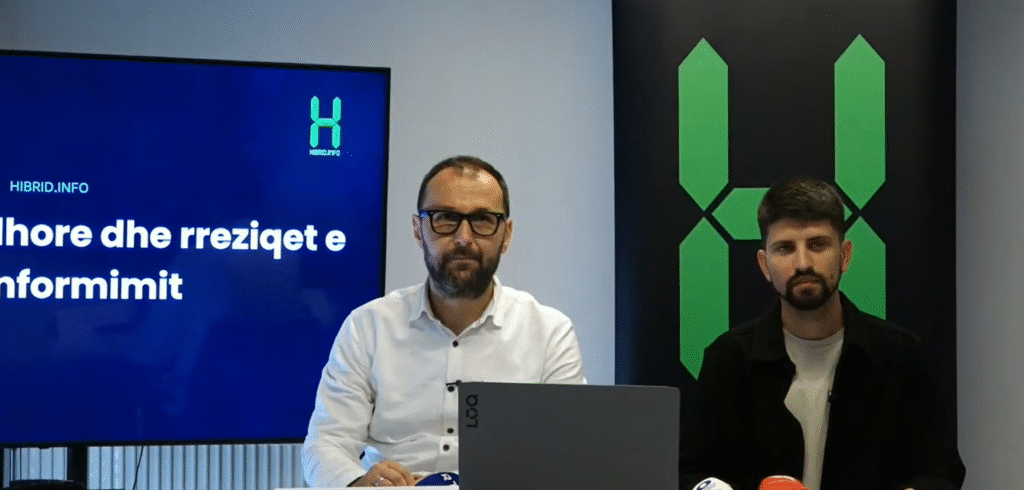

Pristina, May 30 - The fact-checking platform Hibrid.info held a media conference on Saturday (today) on new trends in misinformation and their prevention regarding the June 7 elections.
The conference “'Vaccination' against misinformation during elections” presented some of the risks that may arise during the election campaign in terms of misinformation. It also presented ways to identify and address them.
Hibrid.info researchers listed some of the forms of misinformation based on the previous elections and the current campaign period.
Etrit Rexhepi said that fake polls are being widely distributed on social media. He said that they are being used to manipulate public perception. According to Rexhepi, the aim of these fake polls may be to create an artificial political situation.
"As such content is published frequently, it has a greater number of treatments from our organization and has greater interaction," he said. "So, when these contents are published on social networks, they generate greater interaction from users of these social media. What characterizes fake surveys? They are the lack of a clear scientific methodology, so the source of this public opinion measurement is not known, the sample that was selected, the place, and the time when this alleged survey was conducted are not known."
Another phenomenon is fabricated statements. This includes the deliberate rehashing of old statements by politicians to present them as current, creating confusion about their positions today. There are also cases when old videos are published, from a place or event that is not related to the claim, but are falsely presented as evidence of a current development in order to misinform the public. According to Rexhepi, their goal is to increase the reputation of a particular candidate and present a false reality.
Meanwhile, researcher Festim Rizanaj said that artificial intelligence is also being used for misinformation.
"Interviews with citizens are simulated, using media logos. Based on the content, characters generated with artificial intelligence, which do not exist, make statements and create certain narratives, creating the impression that they are giving an interview to the media, supporting one party or criticizing another party, or even for a certain politician," Rizanaj said.
Within the framework of disinformation through artificial intelligence is also “Slop AI” which represents low-quality content produced by artificial intelligence to drown the information space with propaganda (slopaganda). Its effect is to replace rational debate with emotional spectacle, transforming the political figure from an institutional actor into a viral character. Public debate turns into memes or entertainment and is used as humorous propaganda.
"Content Farms" are another misinformation phenomenon that takes off during election times. These include social media pages that use "clickbait" headlines to attract clicks and increase likes, comments, or shares.
Regarding external influence, Rizanaj said that Serbia aims to create narratives about a lack of democracy and institutional pressure on the Serbian community in Kosovo.
"They are trying to delegitimize the institutions of Kosovo with the idea that institutional terror is being caused here and the arrests that are being made, such as the case of Gracanica, to present them as political arrests and for campaigning. They are also trying to delegitimize the electoral process in Kosovo with the idea that there are no democratic elections here and electoral manipulation through systematic vote theft into the detriment of the Serbian community", Rizanaj said.
Hibrid.info warns that the consequences of misinformation can be polarization in society that can bring about deep divisions that make constructive political dialogue impossible, deformation or shifting attention from programs to fabricated scandals that could ultimately lead to delegation or damaging citizens' trust in the electoral process.
To protect yourself from misinformation, Hibrid.info recommends Clearance e spring of any "sensational" information, to have be careful with the titles that evoke strong emotions, compare news that you see with credible media and fact-checkers, to be skepticism about polls without clear authorship and raise awareness of the possibilities of AI manipulation.