
Wrote: Festim Rizanaj
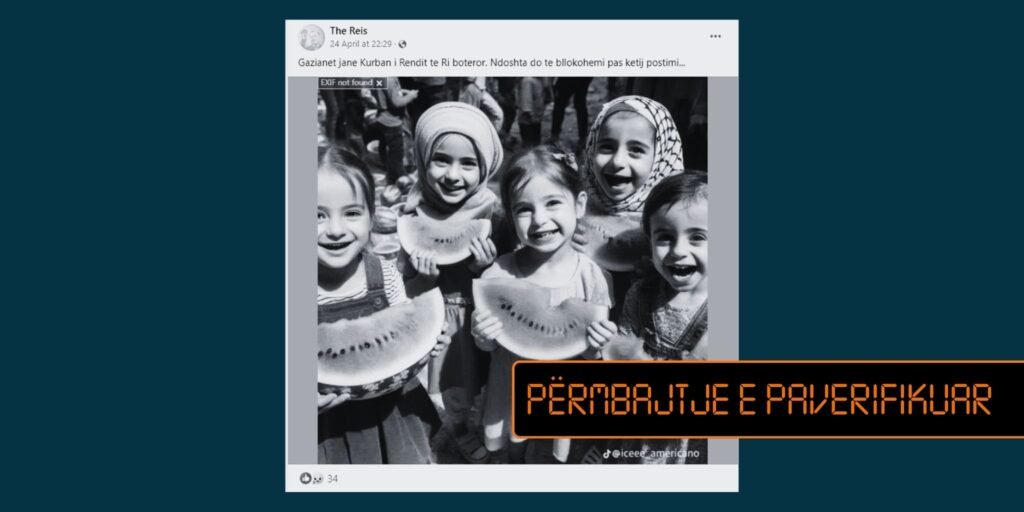
A published image showing several children eating watermelon was claimed to portray Palestinian children in Gaza as victims of the new world order.
This image was published by the Facebook page called "The Reis" which bears the caption, "Gazianet are the victims of the New World Order. Maybe we will be blocked after this post...".
After re-searching the published image, it was found that it was generated with artificial intelligence.
Link to the image published by the Facebook page "The Reis":
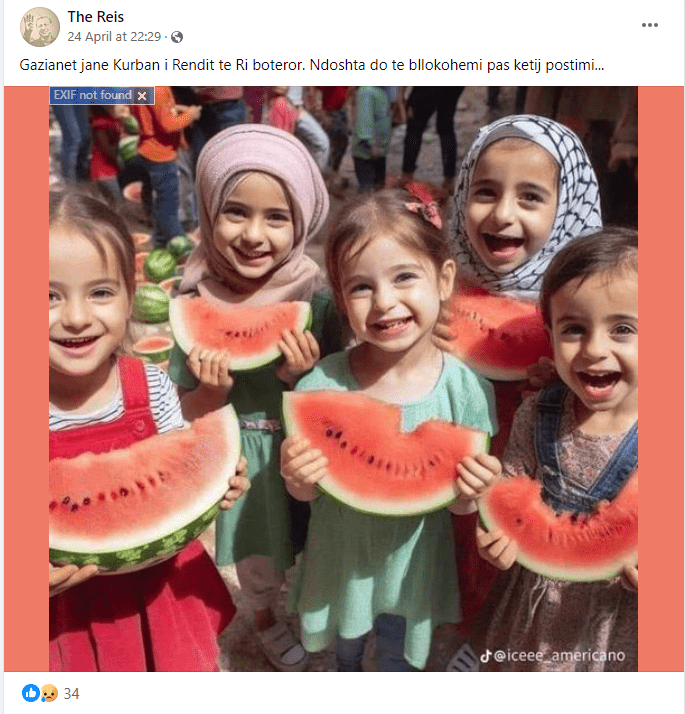
https://www.facebook.com/photo/?fbid=122136655904219751&set=a.122110995134219751 (archive)
After fact-checking conducted by hibrid.info, it was found that this image was published by various international social media pages and accounts. (here)
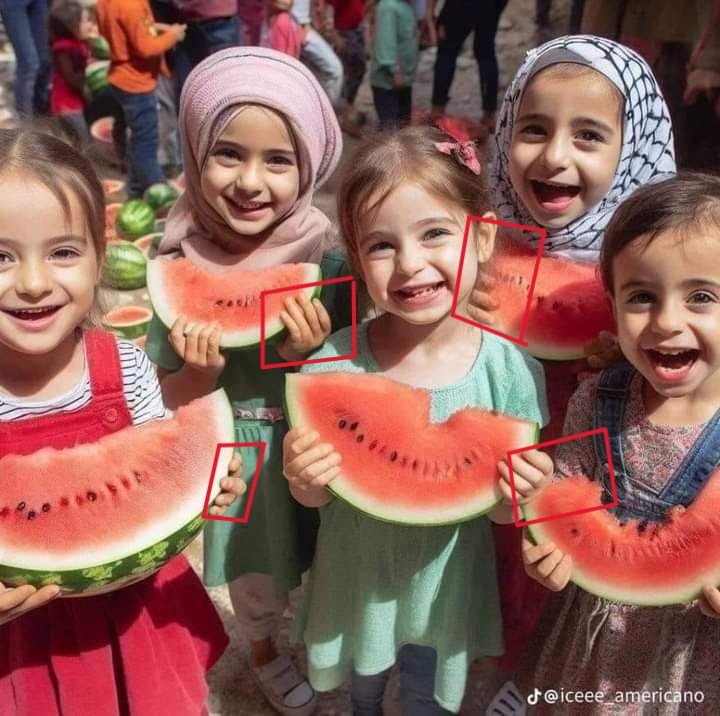
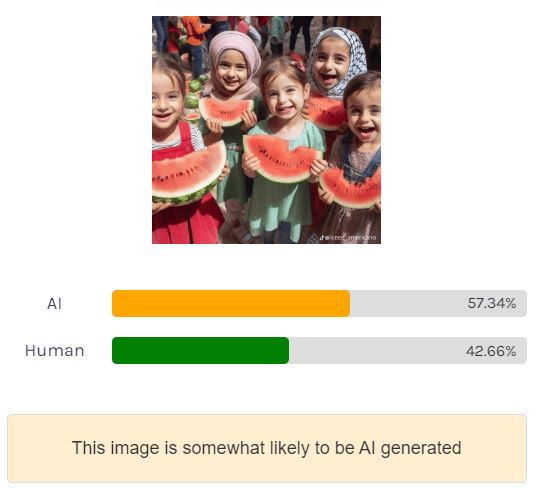
Upon closer inspection of the image, graphic distortions are observed that lead one to suspect that this image was generated with artificial intelligence. So, in the photograph, some distortions have been observed in the details of the hands as well as in other details. (see the photograph below)
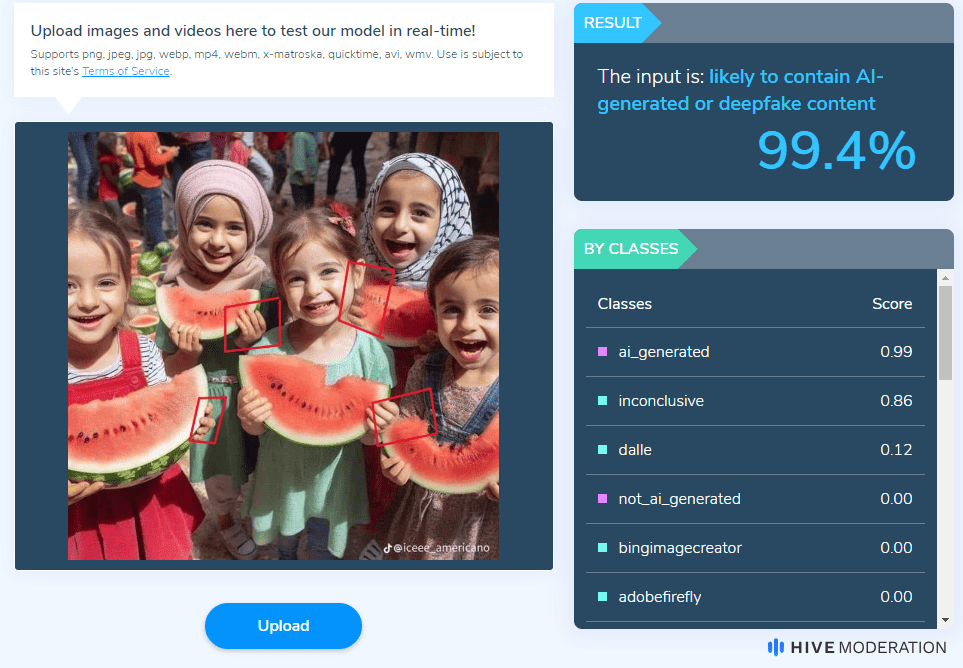
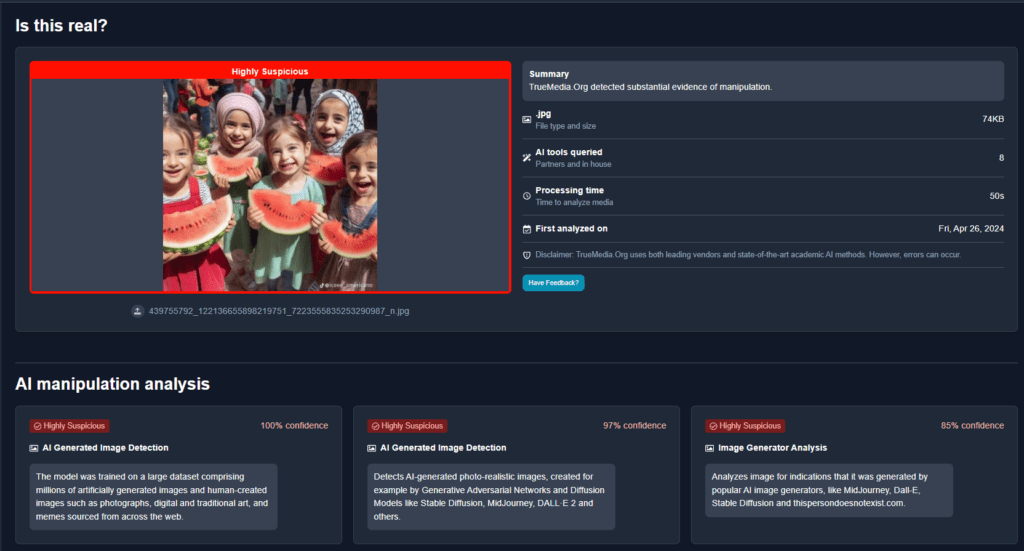
To support this fact, hibrid.info has analyzed the image with applications that identify content generated with artificial intelligence.
Based on the results provided by the application "Hive Motivation"It turns out that the image was 99.4 percent produced with artificial intelligence, while the platform isitai.com emphasizes that "this image was likely created with artificial intelligence", as well as platforms for verifying suspicious content, truemedia.org, highlights the fact that the image is suspicious due to content generated with artificial intelligence.
As part of fact-checking, Hibrid.info has previously dealt with some content with images generated with artificial intelligence (here, here, here, here, here, here).
Analyze:
The published image showing several children eating watermelon, claimed to depict Palestinian children in Gaza, was generated with artificial intelligence.
Based on the working methodology, hibrid.info assesses this image as "Unverified Content".
rationale:
The "Unverified" rating is given to those informative contents that do not provide sufficient information to confirm the claims made in the report, and which could not be verified due to certain circumstances (speed, lack of sources) during the publication of the content.