
Prepared by: Festim Rizanaj
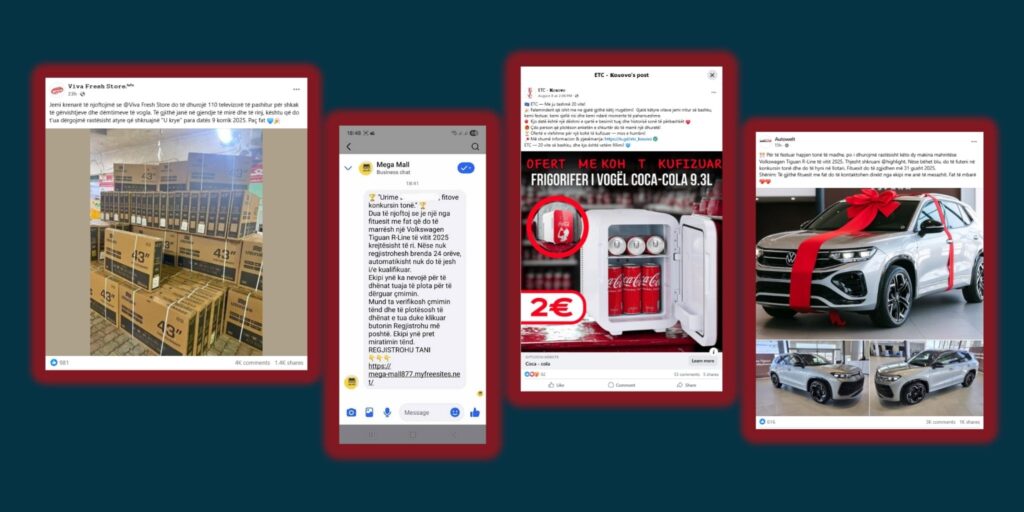
On social networks, especially on Facebook, posts and messages often circulate that promise big rewards, such as free cars or products, with the aim of deceiving users. One of the latest cases is a message sent by the page “Mega Mall", where it was claimed that the winner had received a "Volkswagen Tiguan 2025" car and had to register via a link within 24 hours.
After verification by Hibrid.info, this content was found to be misleading.
The main features that make this case typical of online fraud are:
- False and unfulfillable promises
Fraudsters often promise to win a new car, donate hundreds of televisions, or products at symbolic prices (e.g. a refrigerator for 2 euros), just through a comment or registration.
These rewards have no real basis and are used as bait to attract attention.
- Use of fake pages
The "Mega Mall" Facebook page was recently opened (August 5, 2025) and had no official address or contact information.
Similarly, other pages like "Autowelt","ETS – Kosovo" or "Viva Fresh Store.fans"are created with names that mimic well-known companies to gain credibility.
- Using free or suspicious domains
The link in the message about winning the car sent to a suspicious address: mega-mall877.myfreesites.net, a free service with no connection to the company.
Platforms such as "ScamAdviser" and "Scamdoc" have rated the site as having a low level of trustworthiness and potential for fraud.
- Request for personal and financial data
Scammers usually ask for your name, address, phone number, and even your credit card number, with the false excuse that it's "just for verification."
This is the clearest indicator that their goal is data theft.
- Use of foreign images and logos
To create credibility, real photos of shopping malls or well-known companies are often used, such as the case of the "Mega Mall" shopping mall in Bucharest, used to deceive Albanian users.
- Mass distribution and fabricated comments
The posts receive thousands of comments and shares, with the site itself responding to each comment with a call for users to check private messages.
This creates the illusion of a real competition, leading users to fall prey to fraud.
Analyze
The cases of “Mega Mall”, “Autowelt”, “ETС – Kosovo” and “Viva Fresh Store.fans” show that:
- Promises of big online rewards are a classic scam.
- Fake pages do not have verified contacts, use suspicious domains, and request personal/financial information.
- Fraudsters use company names and mass distribution to create false credibility.
What should we do as citizens?
- Always check if the page is official (has contact, address and many followers)
- Do not click on suspicious links that come through messages.
- Never provide personal or financial information on unknown sites.
- Always compare with the official website of the company claimed in the post.
- Report fraudulent pages to Facebook or relevant institutions.