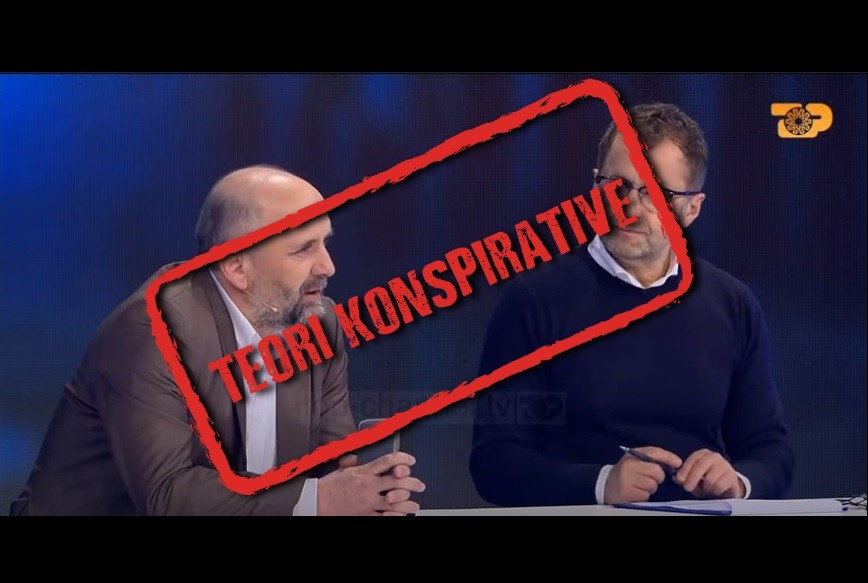

The dilemmas raised about the impact of anti-Covid vaccines, supported by conspiracy theories, are also growing among Albanian-speaking audiences.
Among the biggest contributors to the promotion of these conspiracy theories among Albanian-speaking audiences is the Albanian commentator known for spreading these theories, Alfred Cako.
With his unfounded claims published in the television debate "Rrethi Katror" on Top Channel, he has repeatedly spoken against vaccination. Cako has claimed that the purpose of vaccines from the company "Pfizer" in collaboration with "BioNtech".
Alfred Cako's claim in the debate on Top Channel:
"Pfizer's vaccine combined with BioNtech, which is a company that is working for the first time to decode DNA in different species and mainly in humans. So every vaccine that BioNtech is part of is an mRNA vaccine, so through RNA, DNA is changed. We are in the fourth industrial revolution, where through advanced technology, a small group of people will try to control humans."
Similar claims have been made in other countries around the world. In November of last year, Newsmax.com White House correspondent Emerald Robinson, on a pro-Trump Twitter account, wrote a claim urging Americans to “beware of the Pfizer/BioNTech vaccines.” Emerald Robinson claimed on Twitter that the vaccine “made changes to DNA.”
However, this claim based on conspiracy theories, made by these two people, as well as others, has been debunked by fact-checkers from BBC.
The BBC asked three independent scientists about this and they said that the Corona virus vaccine would not change human DNA.
The vaccine contains a fragment of the virus's genetic material – or RNA (Ribonucleic Acid).
"Injecting RNA into a person has nothing to do with the DNA of a human cell," said Professor Jeffrey Almond of the University of Oxford.
German company Pfizer spokesman Andrew Widger said the company's vaccine "does not change the DNA sequence of the human body. It only presents the body with instructions to build immunity."
However, the lack of data about RNA technology is creating space for the creation of conspiracy theories.
Claire Wardle, author of a report tackling vaccine myths on social media, says there is a "data deficit" around topics like mRNA technology - at a time when demand for such information is high.
"This is causing people affected by misinformation to fill the information gap they have about this vaccine with misinformation," said Wardle, executive director of the nonprofit anti-misinformation organization First Draft.
Analyze:
The claims made by Alfred Cako, but also by conspiracy theorists from all over the world, have no basis on which to prove them. For this reason, these claims can be considered unsubstantiated and assessed as conspiracy theories.
Reasoning:
"Conspiracy theories" are media reports that disseminate a false or unverifiable description of a phenomenon, event, or person, presenting it as part of or the result of a secret plan ("conspiracy"). A characteristic of these reports is that they present a series of claims, presented as facts, between which cause-effect relationships are established, without providing any credible evidence.