
Prepared by: Fatbardh Dema
Monitoring of misinformation in Albanian distributed on social media shows a continuing trend of using these platforms to spread inaccurate and manipulative information.
In the monthly misinformation report, conducted by hibrid.info, in August, Facebook was the leading platform with 31% of total misinformation publications, proving that it is still a vast environment where inaccurate content can be widely shared by users.
TikTok also played a significant role, accounting for 23% of posts in this period. However, the analysis conducted in September revealed a significant shift, with TikTok experiencing a huge increase and becoming the leading platform for the distribution of misinformation, with 35% of the total, while Facebook fell to second place with 33%.
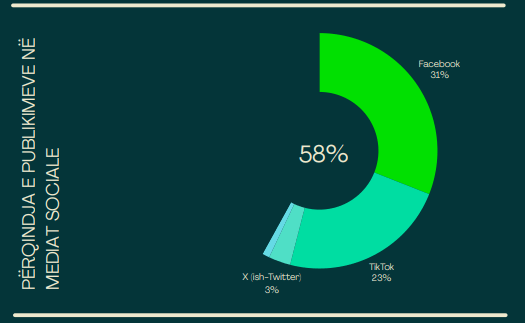
From the misinformation monitoring report for August
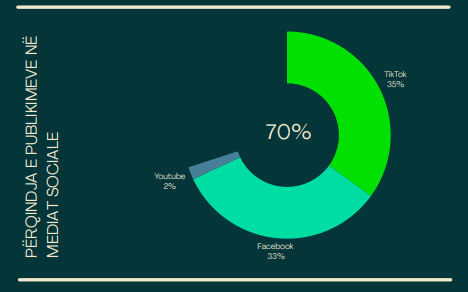
From the misinformation monitoring report for September
In August, 58% of misinformation was published on social media, while 70% of it was in September.
TikTok’s format promotes virality, and misinformation on this platform is able to spread more quickly through simple videos that include false interpretations of current events. The most affected areas include politics, where misinformed content related to elections, polls, and fact manipulation was most common. Furthermore, security concerns and speculation about the arming of the KSF were also hot topics that contributed to the increased spread of disinformation.
During September, content involving fake news related to election issues and rigged polls increased significantly on TikTok.
What were the most misinformed topics on Facebook and TikTok during August and September?
The month of August
Facebook - Fake news and those assessed as fake news/hoax are the two main categories with which misinformation published on Facebook was assessed. Security (11%), social (7%) are the two main areas about which misinformation was spread during the month of August on Facebook. The main topics about which misinformation was spread the most on Facebook are the arming of the KSF, the case of Faton Hajrizi and misinformation about the opening of the Ibar Bridge.
TikTok- Fake news (17%) is the category that has dominated the assessment of misinformation content. In terms of fields, politics (8%) and security (8%) are the two areas about which the most misinformed people were on the TikTok platform. The arming of the KSF and election polls are the two topics about which the most misinformed people were on TikTok.
The month of September
Facebook - On Facebook, social (11%), security (10%) and politics (10%) are the three main areas about which people were misinformed the most. Of these areas, misinformation assessed as fraud (11%), disinformation (10%) and fake news (8%) dominate. Content topics include the arming of the KSF (5%), reimbursement of electricity bills (3%), properties financed by Serbia, job opportunities, earthquakes, prices of electric bicycles, the US elections, Clinton's statements about Kosovar politicians, religious affiliation, gunshots in the "Aktash" neighborhood, etc.
TikTok – Fake news has dominated TikTok, accounting for 19% of content. The two main areas where misinformation has been spread on TikTok are politics (19%) and security (14%). In terms of specific topics, the arming of the KSF and election polls have been the most widespread.
The rise of misinformation on TikTok, especially in September, and Facebook's consistent position show that social media remain powerful channels for the spread of inaccurate information.
The full misinformation monitoring report for September can be found here. here.