
Content is circulating on social media platform Facebook that uses topics of direct interest to families, such as child allowances, financial benefits, and assistance for newborns.
In some cases, the information in the article may be true, but the way it is presented in the headline creates a misleading impression. The headline may not indicate where the event took place, when the decision was made, or whether the information is related to Kosovo at all.
This is also observed in some Facebook pages that present themselves as media, but that distribute such content without providing the main information in the title. As a result, a news story about a measure taken outside Kosovo may appear to apply to citizens in Kosovo as well.
Some examples
One such example was published on September 8, 2026 on the page “news.tv", with the title: "BREAKING NEWS / FANTASTIC / 1 thousand euros for every newborn". The post also included a link to the website "4eks.net".
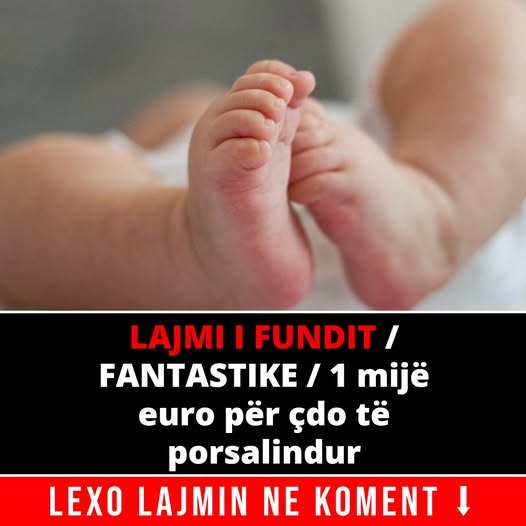
After opening the article, it became clear that the information was about a measure by the Municipality of Kallithea in Athens. It was about a grant of 1 thousand euros for parents who met the established criteria.
The same article was also found on the website "cookfixes.com” and was shared on Facebook by the page “Pristina City". In this case, the title was: "1 THOUSAND EUROS ADDITIONAL FOR THIS CATEGORY".

In both cases, the headlines did not indicate that it was a measure by a municipality in Greece. This could lead the reader to think that the news is related to Kosovo or that the payment applies in general to every newborn child.
Another case is directly related to child benefits in Kosovo. On September 8, the page “Pristina City” published a content with the title: “BREAKING NEWS / No more 30 euro surcharges".

However, after opening the link in the post, the article explains that the Ministry of Finance, Labor and Transfers had begun verifying the beneficiaries of child allowances. Only those who did not meet the criteria could be removed from the scheme, while families who continued to meet the conditions would continue to receive the allowances.
This case was previously addressed by hybrid.infoOn August 18, hibrid.info assessed that the headline created the impression that the 30 euro allowance was being stopped for all beneficiaries. In fact, it was about the verification of beneficiaries and the possibility of removing those who did not meet the criteria from the scheme.
Why do these topics attract clicks?
Topics related to social and financial benefits have an important feature: they directly affect people's lives. Information about child benefits, payments or financial assistance can be seen as something that can directly affect the reader's family.
A report of Reuters Institute for the Journalism Study at the University of Oxford shows that personal relevance is an important factor in what news people choose to read. According to the report, people tend to pay more attention to news that is relevant to their lives, family, work or the community they live in.
This helps to understand why topics about social benefits can be used to attract clicks. When a headline suggests that a new payment has been approved, that a benefit is being increased, or that assistance is being stopped, the reader has more reason to click to understand whether the information affects them or their family.
The problem arises when the headline leaves out key information, such as the location, time, or conditions that apply to the benefit. In these cases, true information can be presented in a way that creates the wrong impression on the reader.