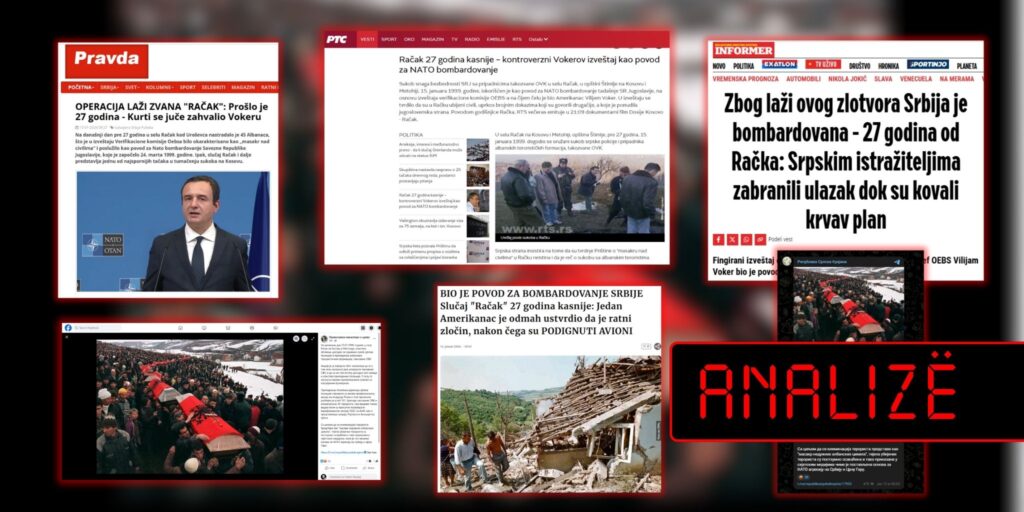

Wrote: Festim Rizanaj
As Kosovo commemorates today the 27th anniversary of the Recak Massacre, one of the crimes of Serbian forces that shocked the world's conscience, the mainstream media in Serbia continues its campaign to distort the historical truth.
Through conspiracy theories, Serbian media are attempting to present this massacre as a "staged scenario" to justify NATO's intervention in 1999.
The "Fixed Scenario" and the Attacks on William Walker
Serbian newspapers and portals have resumed using terms like "terrorists" for civilian victims and "falsification" for international reports, attempting to rewrite the history of January 15, 1999.
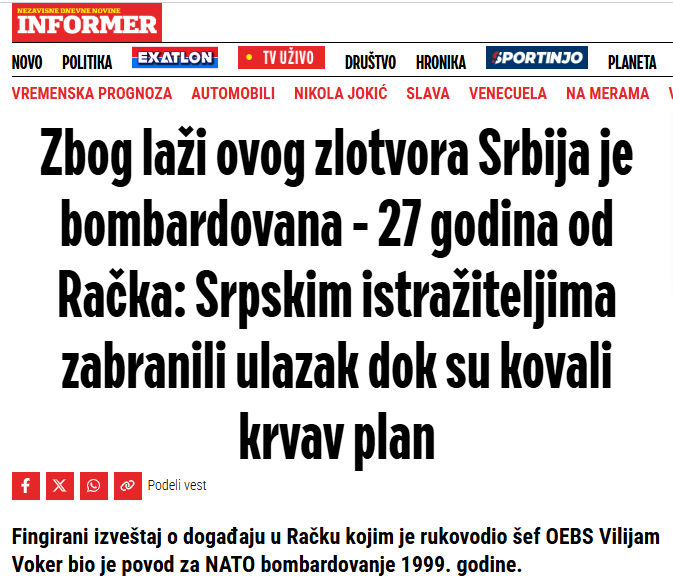
Informer has harshly attacked the former OSCE ambassador, titling the article: "Because of this criminal's lies, Serbia was bombed - 27 years from Recak"According to them, William Walker led a “bloody plan” against Serbia by preventing Serbian investigators from entering the village.
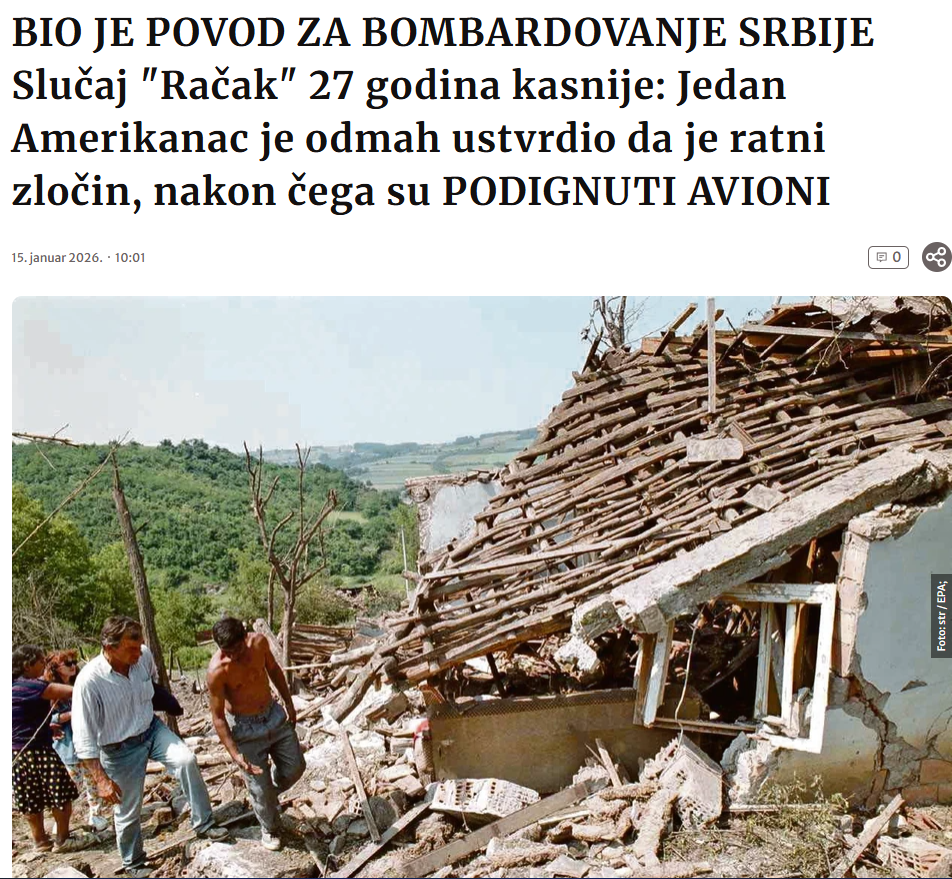
Blic.rs follows a similar line, emphasizing that The "Reçak" case was just a pretext concocted by an American diplomat to launch NATO bombings.
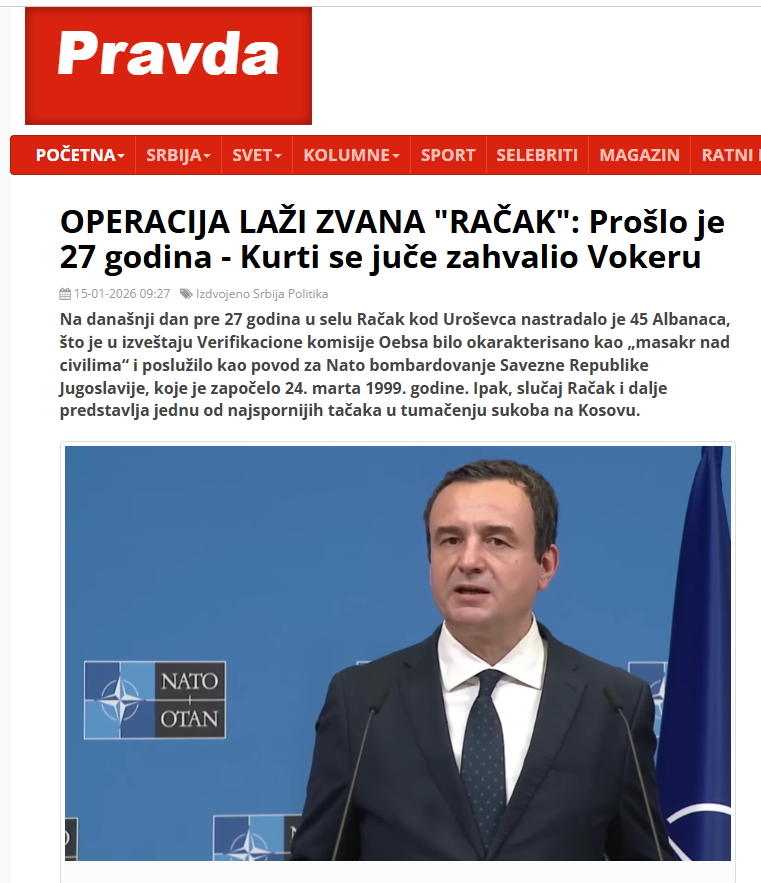
Pravda.rs described the event as a "operation of lies", claiming that the deaths of 45 Albanians were the result of an armed conflict and not a massacre of civilians.
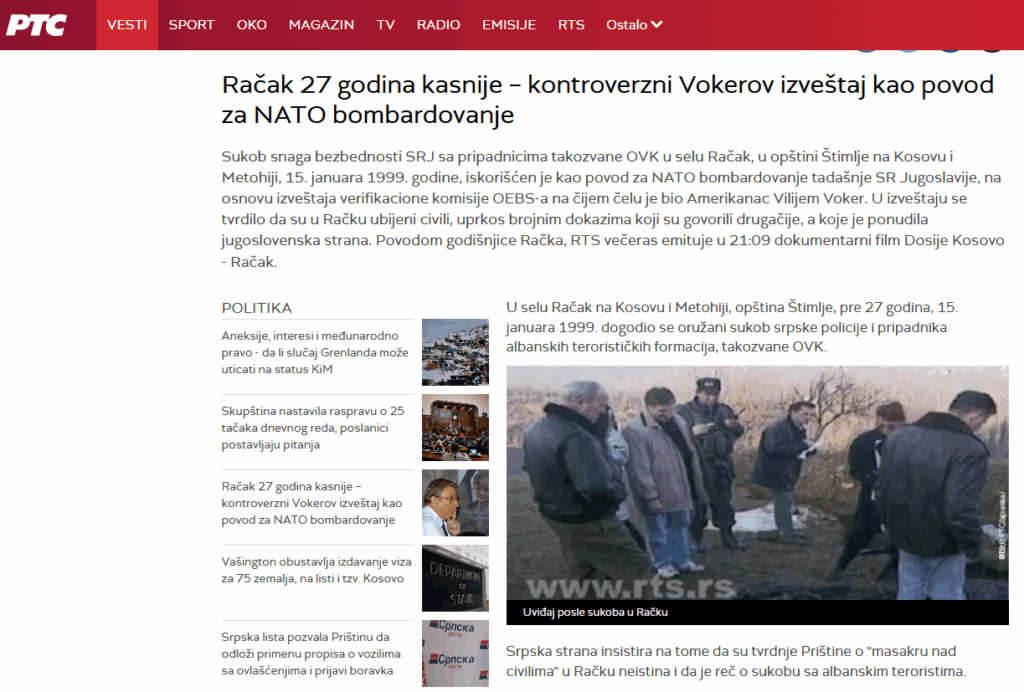
Even the public broadcaster, RTS, has joined this wave of revisionism. In their article “Reçak 27 years later”, they refer to the event as a "conflict with the KLA" and warn of the documentary "Kosovo - Recak File", which aims to legitimize the Serbian state's version.
False theories about “self-massacre” on social media
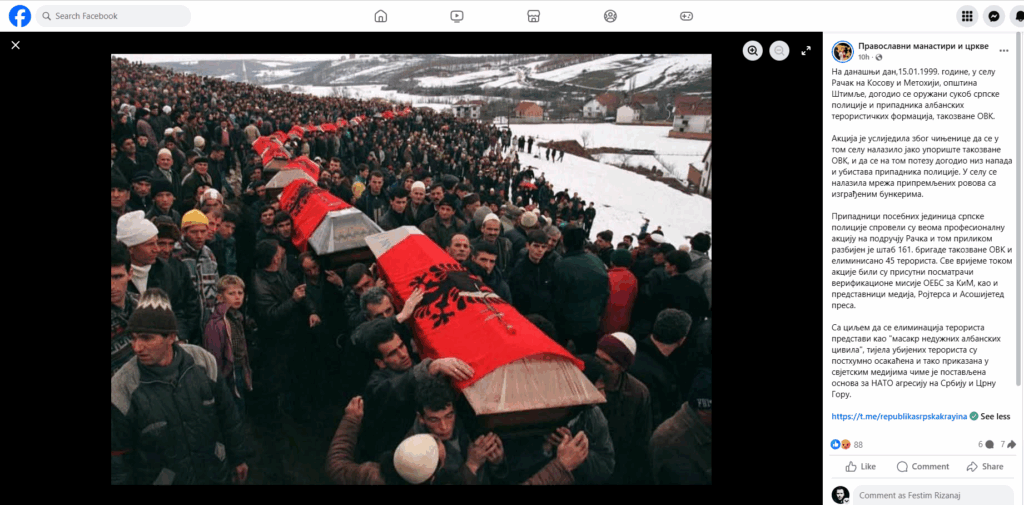
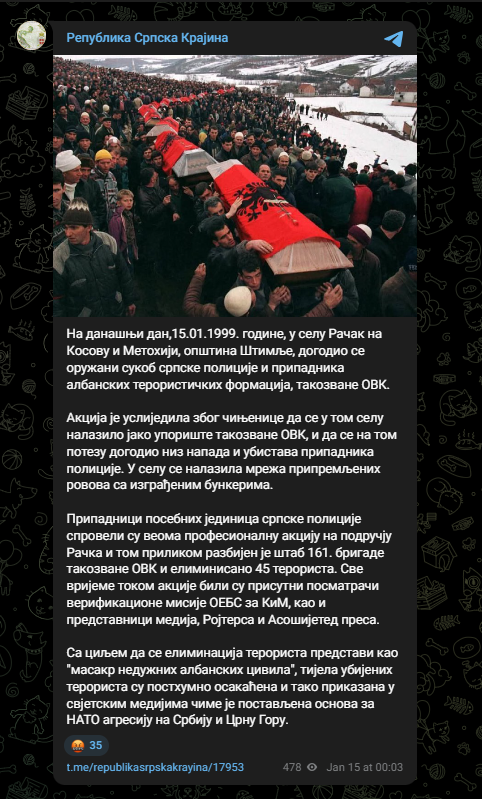
In addition to the media, on social networks Facebook and Telegram Posts in Serbian are circulating regarding the Recak incident.
These narratives include the claim that the people killed were members of the 161st KLA brigade and not civilians.
Another claim spread on these platforms is that the bodies of the killed were mutilated after death by Albanians, adding that the fighters' uniforms were changed into civilian clothes and post-mortem operations were carried out to present them as victims to media outlets such as Reuters and AP.
What is the truth about the Racak Massacre?
On January 15, 1999, in the village of Reçak in the municipality of Shtime, one of the most serious Serbian crimes in Kosovo occurred.
for The massacre of Recak, where 45 Albanian civilians were killed and massacred, have reported many international media outlets, based on international reports, considered this event a massacre of defenseless civilians. William walker, former head of the OSCE Verification Mission in Kosovo, was the first international official to witness this massacre, and the first to alert the world to Serbian atrocities in Kosovo. (You can read more about the Racak Massacre here.) HERE)
The argument that the Recak massacre was committed by Serbian forces has been made by many global human rights organizations, among them the most credible, Human Rights Watch (HRW), which has also accused Serbian police and military forces of this crime.
Human Rights Watch categorically rejected the Yugoslav government's claims that the victims of the January 15 attack in Recak were either Kosovo Liberation Army soldiers killed in combat or civilians caught in crossfire between the parties.
After a detailed investigation, the organization accused Serbian special police forces and the Yugoslav army of indiscriminate attacks on civilians, torture of prisoners, and executions at close range. Evidence suggests that government forces had direct orders to kill villagers over the age of fifteen. (HERE)
Another HRW report:
Journalists at the scene early on January 16 told Human Rights Watch that many of the twenty-three men also bore signs of torture, such as missing fingernails. Their clothes were bloody, with cuts and holes in the same spots as their bullet wounds, which argues against the government’s (Serbian, ed.) claims that the victims were KLA soldiers who had been dressed in civilian clothes after being killed. (see here)
Hibrid.info has addressed the issue of the Racak Massacre and the Serbian and Russian narratives about it in the past – HERE, HERE).