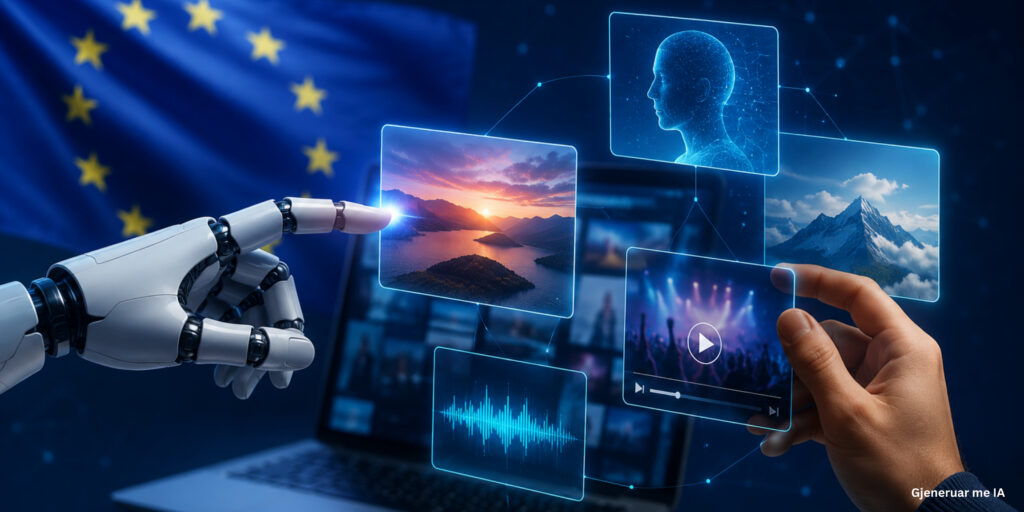

The European Union (EU) will start implementing the new rules for the transparency of content created or edited with artificial intelligence (AI). According to the new rules, companies will have to make it clear when a piece of content, such as an image, video, audio or text, has been created with the help of AI.
Companies will be able to do this through digital watermarks and other technical markers that make it easier to identify content generated by artificial intelligence. Failure to comply with these requirements could lead to significant fines.
According to an EU official, generative artificial intelligence has significantly increased the possibility of creating and distributing disinformation, enabling the production of content on a large scale and its adaptation to specific audiences. For this reason, the rules aim to enable citizens to more easily distinguish real content from synthetic ones.
Of particular focus are deepfakes, AI-created or manipulated content that can appear real, including texts, photos, videos, and audio recordings.
The new requirements will apply primarily to content created in the context of professional activities. Individuals who use artificial intelligence solely for personal purposes will not be affected by these obligations.
Even AI-generated texts that aim to inform the public on matters of general interest will have to be labeled if they are produced without human editorial oversight. However, the rules provide exceptions for artistic, creative, satirical and fictional content.
Existing artificial intelligence systems will have until December 2 to adapt to the new requirements.
The EU rules have drawn mixed reactions from tech companies. Some industry representatives have warned that implementation could be complex and that a large number of labels could create confusion for users.
Meanwhile, major tech companies have already begun using various mechanisms to identify AI-generated content. TikTok requires labeling such content, while Meta uses the “AI Info” label on Facebook and Instagram. Google, along with other tech companies, is also working on developing tools to digitally mark content created by artificial intelligence.
source: lemonde.fr