
Wrote: Fatbardh Dema
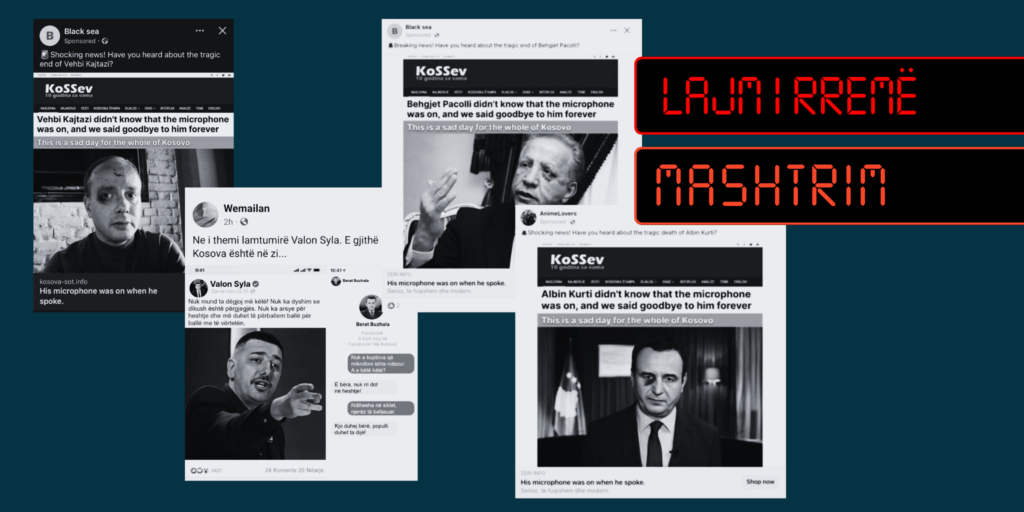
Today (August 8), several posts with photos of Kosovar journalists and politicians were published on the social media platform Facebook in a sponsored form (advertisement).
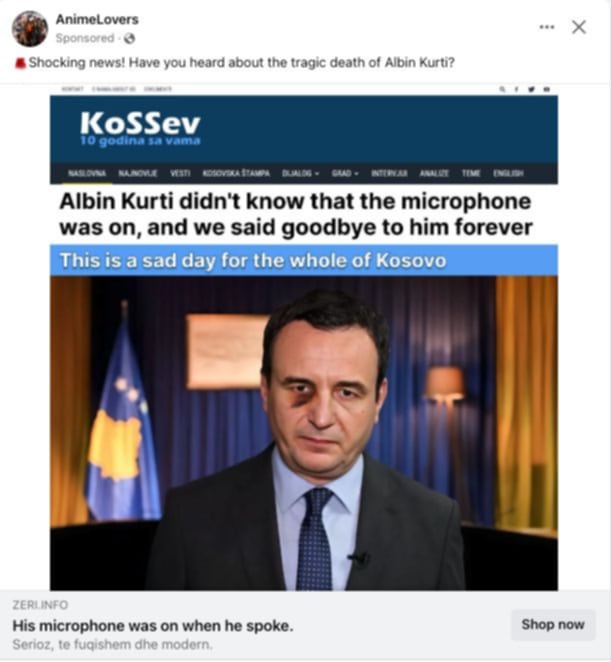
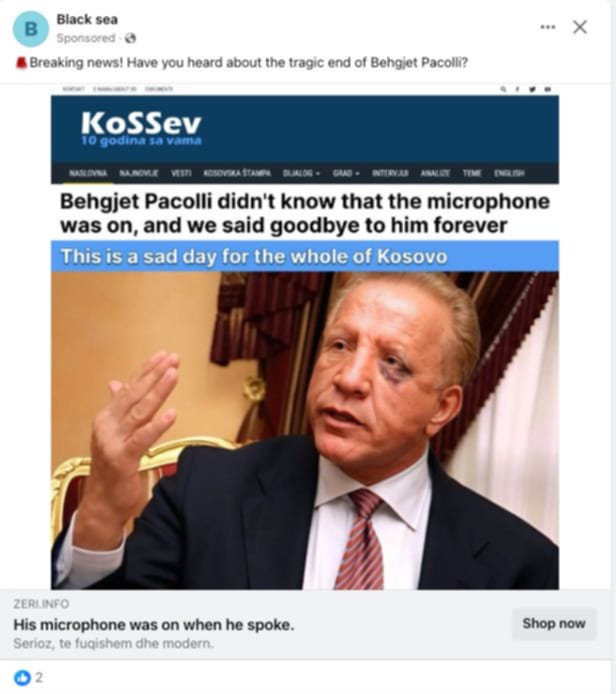
These posts feature figures such as journalists Valon Syla and Vehbi Kajtazi, as well as the Prime Minister of Kosovo, Albin Kurti, and the leader of the political entity Alliance for New Kosovo (AKR), Behgjet Pacolli.
What do these posts contain?
All of these posts, published by different Facebook pages, contain the same caption "Shocking news! Have you heard about the tragic end of...", adding the name of the aforementioned characters to each post.
Also, at the bottom of these posts are the names of online media outlets in Kosovo such as "Zeri.info". "KlanKosova.tv" and "Telegrafi.com". While at the top of the image is the name of the Serbian language media outlet in Kosovo "Kossev".
Verification:
After research conducted by hibrid.info, it was confirmed that these posts are false, visually manipulated. Such articles have not been found published in any of the aforementioned media outlets.
Photos published on Facebook by pages like "AnimeLovers", "Black Sea" and "Wemailan":
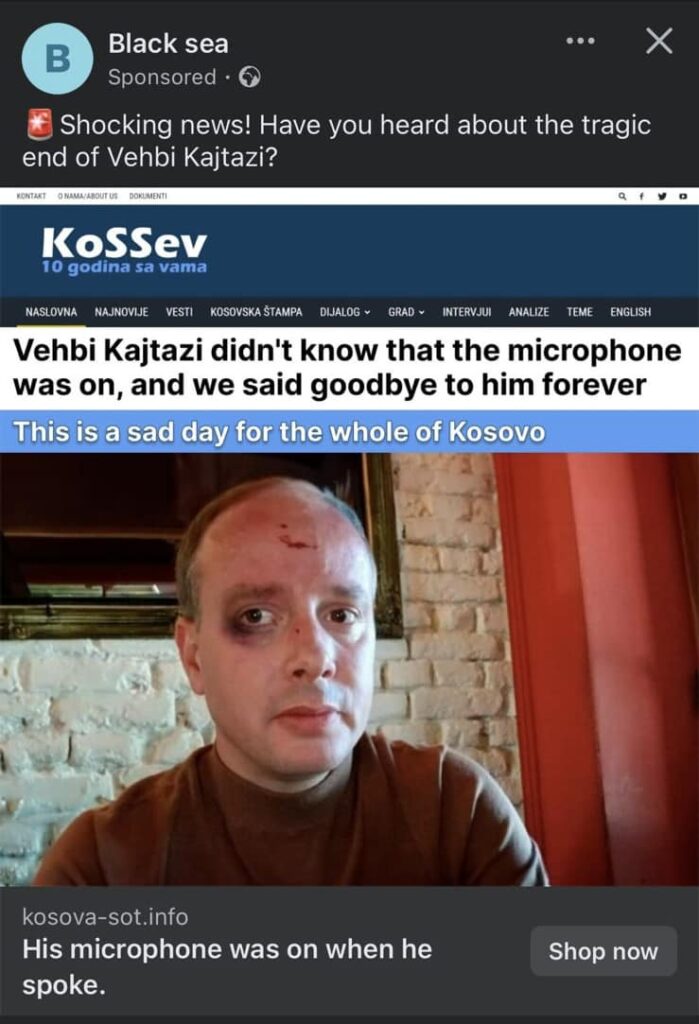
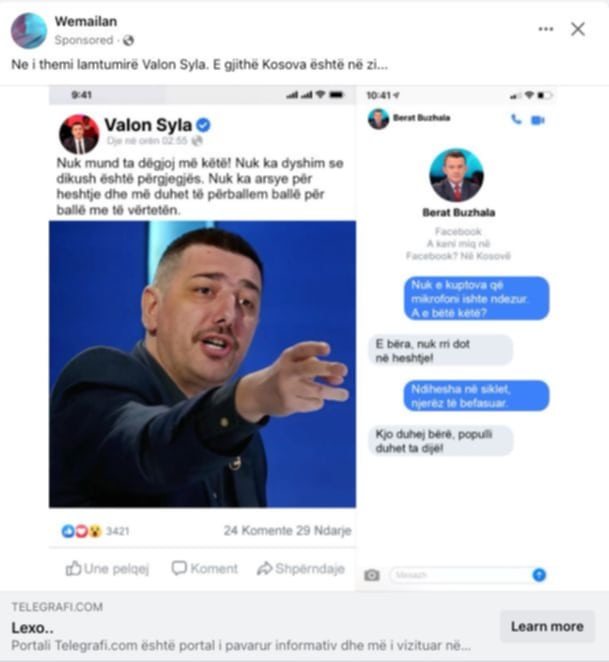
Hibrid.info has managed to find the aforementioned Facebook page “Wemailan”, which had published the photo of journalist Vehbi Kajtazi. But in the publication history of this page, no such post is found. The same page has no followers and was opened yesterday (August 7) (see here).
While the other page found by hibrid.info, “AnimeLovers” has posted sponsored content (advertisement), using the name of the online medium “KlanKosova.tv” and the logo of the medium in the Serbian language “kossev”. (see here)
After clicking on this post, a website called “notting-hill-carnival-app.com” appears. Using the website credibility platform “Scamdoc.com”, we see results that this domain has a low level of trust, and the same one appears to be registered in Iceland. (see here)
Regarding these posts, journalists Valon Syla and Vehbi Kajtazi have also reacted, calling them "fake news" and "propaganda". (see here and here)
There was also a reaction regarding these posts from the Association of Kosovo Journalists (AGK). Through an announcement on its official Facebook page, AGK described these posts as a dangerous campaign for journalists and the media, calling on the Kosovo Police with the Cyber Unit to investigate the origin of such posts and prevent their continued publication. (see here)
Analyze:
Various Facebook social media pages published photographs of several political officials and journalists in Kosovo, claiming that they had passed away.
These posts feature the names and logos of several online media outlets in Albanian and Serbian.
However, after research conducted by hibrid.info, no article with such a claim was found published in any of these media outlets.
All of this content contains false claims and is visually manipulated.
Based on its work methodology, hibrid.info assesses this content as "Fraud" and "Fake News".
Reasoning:
The “Deception” rating is given to informational content that is manipulated in terms of visual (deepfake, cheapfake), audio, or textual content to deceive the audience. This form of deception is usually used to produce false and manipulated content.
The “Fake News” rating is given to informational content that is entirely fabricated or that contains factually incorrect claims or information. Content that is rated as fake news can be defined as having been created and distributed with the intent to misinform the public, i.e., to present a claim that is completely false as fact.