
Wrote: Fatbardh Dema
During international crises, disinformation spreads faster and more widely than true information, especially when it contains negative emotional charge.
Posts that incite fear, panic, or alarm spread faster because people react emotionally and share information before verifying it (see here the study "Diffusion of real versus misinformation during a crisis event").
After the start of the US/Israel-Iran conflict, several Albanian-language Facebook pages began publishing misinformation content.
In this context, the claims currently circulating in the Albanian language are: the possibility that the price of oil will reach 4 euros per liter or the assumptions about attacks by Iran on the Bondsteel military camp in Kosovo.
Articles that were verified by hibrid.info
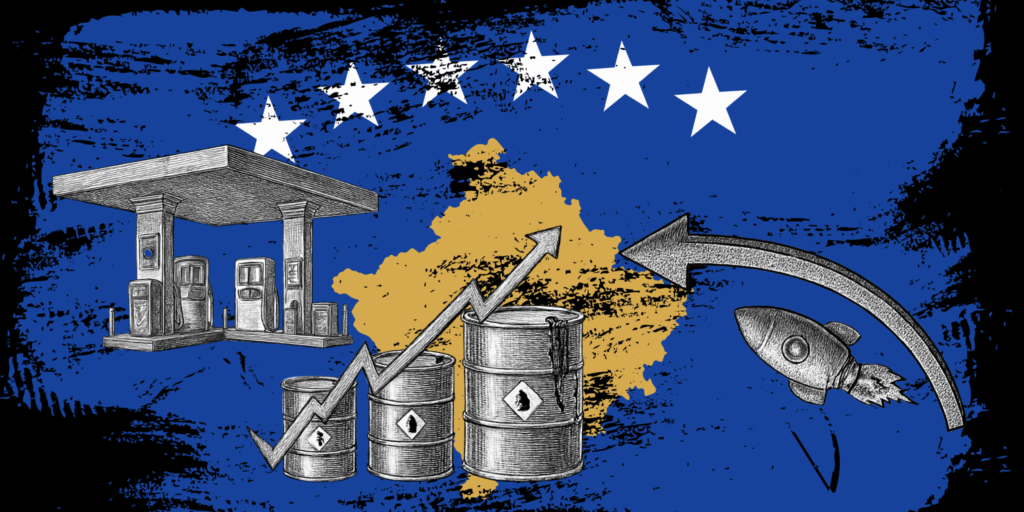
On March 2, several Facebook pages claimed that the price of a liter of oil could rise above 4 euros, following reports that Iran had destroyed several oil tankers.
However, after verification by hibrid.info, no credible local or international media reporting was found that supports this figure.
International media reports such as Reuters and CNN indicate that the price in the US has been around $3 per gallon (1 gallon = around 3.78 liters), with expectations of an increase to $3.25 per gallon, a figure that is far from the claim of over 4 euros per liter. (see here verification by hibrid.info)
Through several posts published by a Facebook page, it was claimed that Iran has published a map with American bases that will be hit, including the Bondsteel camp in Ferizaj.
Fact-checking by hibrid.info confirmed that the material is from 2023 and originates from an American platform that deals with geopolitical analysis and forecasts of world developments, and not from Iran. The map was part of an analysis of the Iranian Khorramshahr missile and does not constitute an official announcement of attacks. (see here verification by hibrid.info)
Another case of disinformation in Albanian was found on another Facebook account. This account published two images showing cars waiting to be refueled at gas stations.
After fact-checking by hibrid.info, it was confirmed that the footage is old. It was shot in Romania and North Macedonia during 2022. (see here verification by hibrid.info)
What does the study say about this phenomenon?
The study "Diffusion of real versus misinformation during a crisis event: A big data-driven approach" (Spreading Truthful Information Versus Disinformation During a Crisis Event: A Big Data-Based Approach) shows that content with negative emotion (panic, anger, alarm) spreads faster than factual information. Posts that create a sense of urgency or threat have a higher probability of going viral.
The study shows that during crises, people share information because of an emotional reaction, not necessarily because of complete trust. Sharing often occurs because of a sense of urgency (“others need to know”).
The study suggests that fake content during crises is more dramatic, has a simpler narrative, presents a clear "enemy", and provides extreme scenarios.