
The definition of the term “fake news” refers to media content that is not actually news, but rather misinforms the audience. Many researchers suggest using the term disinformation, since there can be no news that is not true, content is either news or false.
But, how much knowledge does Kosovar society have about these phenomena and how should it deal with them?
Lies during the pandemic have proven that some Kosovo citizens are not willing to distinguish them from the news.
Disinformation during this period has spread to social networks, which proves that there is a large participation of Kosovo citizens in the circulation of fake news, whether through clicks, reactions, comments and distributions on social networks. In these cases, the reaction has been mainly affective, that is, a reaction under the influence of emotions such as fear or panic.
Behavioral theories of media suggest that the audience models behavior in society depending on the information it has received from the media. In this sense, if Stefano Zhecchi's formula that "a man is what he sees" is valid, we can say that the citizens of Kosovo are an audience that actually has a misunderstanding of reality due to the inability to distinguish lies. In this sense, the behaviors of a part of the Kosovar public, whether towards the pandemic or towards politics and other developments in society, are also incorrect.
The Kosovar public, in addition to the challenge of distinguishing lies such as recipes for treating coronavirus at home (link: ), has also been continuously faced with disinformation that has been constructed with political motives, of the war between parties, interest groups and ideologies in Kosovo.
So, if we start from the motives for publishing fake news in the case of Kosovo, we can distinguish two main motives. First, financial motives, which come from various websites, which are broadcast on social networks, with the idea of increasing online traffic, which would allow the owners of these websites to make more money. Such types of disinformation have aroused the interest of the audience mainly by inciting fear, uncertainty, panic and by building conspiracy theories about the pandemic, vaccination and similar problems. As a result of this news, which is also linked to the easing of measures by the Government of Kosovo, the behavior of citizens towards the virus has changed. It is enough to mention here the fact that in a survey conducted during this time, it turns out that about 30 percent of citizens did not believe that the COVID-19 virus exists.
Second, political motives that aim to either discredit political opponents or promote and advertise a certain political idea or politician. Here it is enough to recall the fake news of the death of the leader of the Democratic League of Kosovo, Isa Mustafa.
Kosovar politicians can be said to be the group that has "best" used the word "fake news", due to the fact that they have often contested real news that has not been in their favor as disinformation.
Kosovar models of combating disinformation
Despite efforts to combat disinformation in various ways, Kosovar society cannot be said to be prepared to face this global phenomenon. In this sense, the fight against disinformation must be unified and intensified. Disinformation or “fake news” in the case of Kosovo can be fought in three main ways.
First, credible media in the country should create columns in which fake news is reported on a daily basis, denouncing it. This commitment normally requires professional verification and additional costs for the media, however, it is an investment that serious media must make in order to make a difference. Also, from time to time other media outlets report on this issue, but do not have staff specifically engaged and trained in this field.
Second, various organizations, academic, non-governmental, institutions, should organize various campaigns to denounce fake news. In this way, society will be made aware of the effects that “fake news” has on the public, especially on young people. Currently, initiatives in this field are completely individual, as is the case of professors of the Department of Journalism at the University of Pristina. However, there is no unified form of the fight against this phenomenon. Therefore, conferences, papers and case studies should be increased in this field.
Civil society, in the case of Kosovo, has not dealt much with this phenomenon, with the exception of the organization Cyber Security and Privacy, which has denounced some of the “fake news” since the beginning of the pandemic. However, despite the great work, the capacity of this organization cannot manage to cover all disinformation in Albanian in real time. In this sense, other civil society organizations should also address this problem, mainly in raising awareness among young people about this field. Unlike the two previous sectors, state institutions have taken almost no steps in combating this phenomenon.
Third, and most importantly, in this fight against disinformation, Media Education should be made a mandatory subject in pre-university education. This step would enable children and young people to be able to critically judge media content, which would also enable them to distinguish lies from truth, and consequently we would have less "fake news" because no one would believe it.
All the actions that can be taken in society to combat misinformation have no real effect if we do not educate children and young people to be skilled in the correct and fair use of the media. Therefore, advanced societies have decided to make learning about the media, its effects and how to use it part of their curricula from pre-primary education to universities.
This opinion piece, written for kallxo.com, is published on hibrid,info with the author's permission.
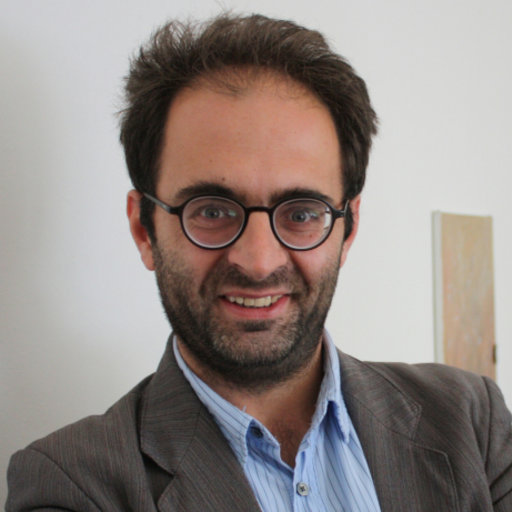
(Alban Zeneli is a lecturer at the Faculty of Journalism at the University of Pristina. He is also the author of many scientific publications in prestigious international journals. Zeneli is a regular columnist at hibrid.info).