
Wrote: Festim Rizanaj
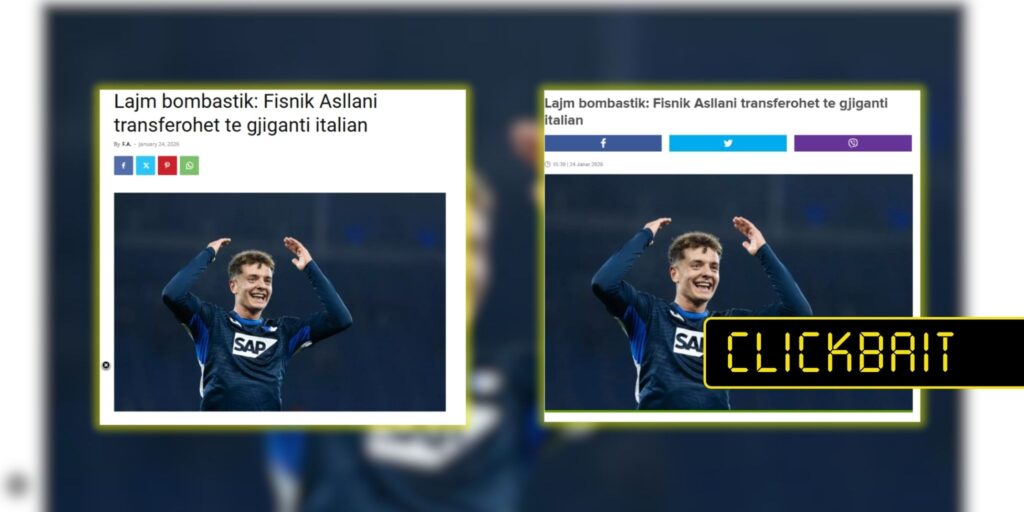
The information portals "orainfo.net" and "futboll.al" published on Saturday, January 24, the article titled: "Bombastic news: Fisnik Asllani transfers to the Italian giant".(here, here)
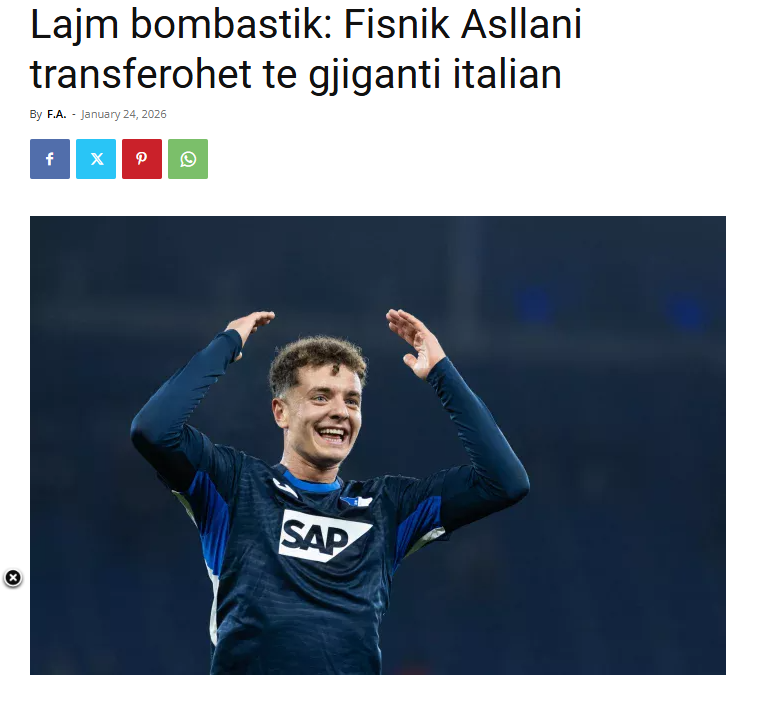
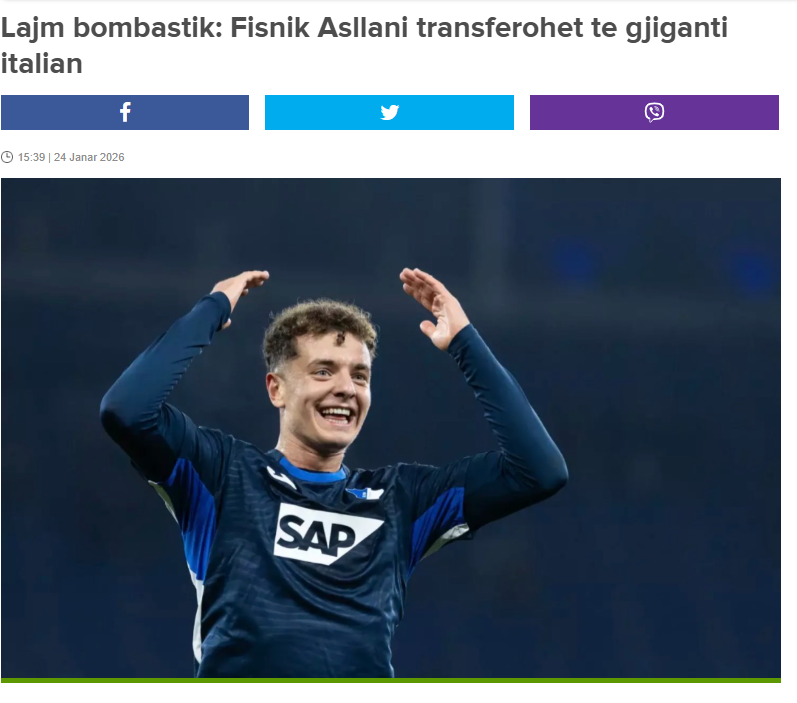
After clicking on the article, the text highlights that it is about the interest of the Italian club Juventus, following the departure of footballer Dušan Vlahović.
What's wrong with the title of the article?
The headline presents Fisnik Asllani's transfer to Juventus as a done deal, and not as an interest of the club.
While inside the article it says: "Juventus has already started planning for the future of the offensive department for next summer, with the aim of replacing Dusan Vlahovic and bringing in new key names in attack. Among the profiles that the Black and Whites are following closely is Fisnik Asllani, who is currently active at Hoffenheim."
So, within the text it is made known that it is only about Juventus' interest in Fisnik Asllani.
Hibrid.info has researched the news regarding Fisnik Asllani's transfer to Juventus. The information portal has written about Juventus' interest in Asllani. bianconeranews.it, who writes: “Juventus are already planning their attacking future for next summer, aiming to replace Dusan Vlahovic and find new key players in attack. Among the names the Bianconeri are keeping an eye on is Fisnik Asllani, a central striker born in 2002, originally from Kosovo and of German nationality, who currently plays for Hoffenheim.” (here)
Analyze:
The headline presents Juventus' interest in Fisnik Asllani as a completed transfer. However, within the text it is made clear that this is only about the Italian club's interest.
According to bianconeraneës.it, Juventus is planning to replace Dusan Vlahovic and among the players they are closely following is Fisnik Asllani, currently at Hoffenheim.
Based on its work methodology, hibrid.info considers this title to be "clickbait".
Reasoning:
“Clickbait” is considered to be informational content whose title is general and does not disclose the location of the event, context and relevance. Such texts and articles aim to attract the attention of the audience with sensational headlines with misleading consequences, which do not accurately clarify the content of the article. “Clickbait” headlines are mainly made to attract readability in the case of media publications and/or to earn from clicks in the case of commercial publications.