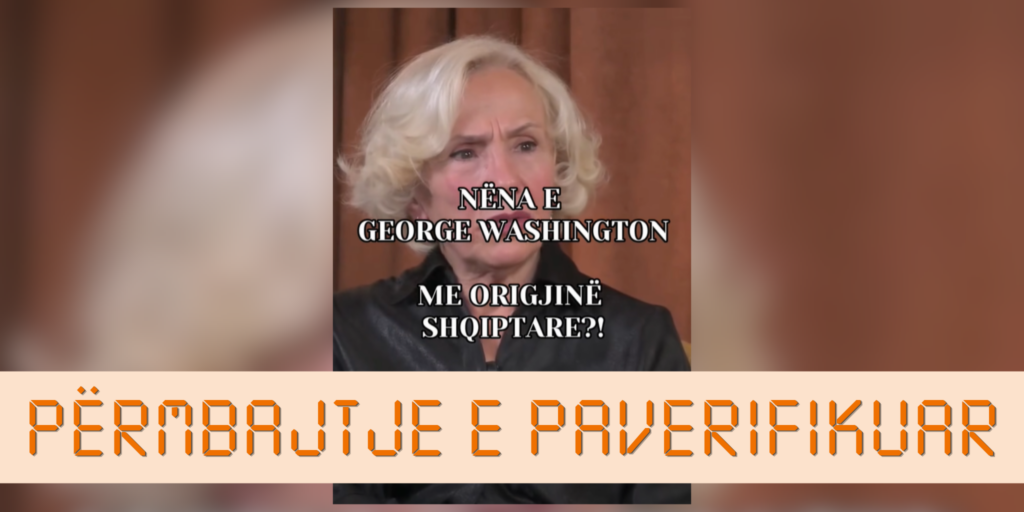

A video has been released showing Hyreme Gurra, a professor and diplomat, declaring that George Washington, the former president of the United States of America (USA), was of Albanian descent.
This statement was given in the framework of an audiovisual format titled "TROÇ", published on Friday (October 30) on the social networks of the medium "Portalb.mk" (see here).
The statement was also published in a separate form, but was later removed from the media outlet's social media (see here).
The truth?
George Washington was not of Albanian descent.
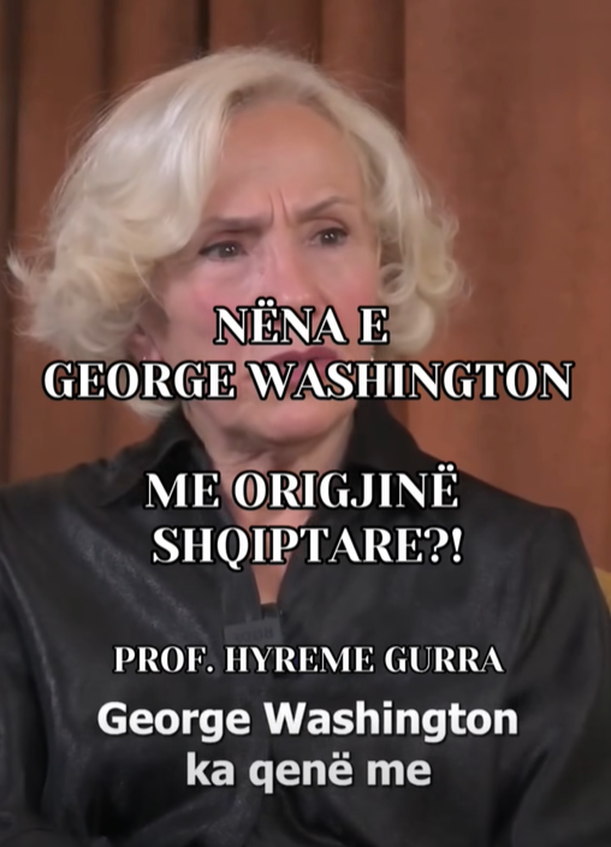
The video was found and posted on other Facebook pages (see here and here).
You can also find the statement in the full video of the show published on the official YouTube channel of this medium (see here).
Hyreme Gurrës's statement
"In Bill Clinton's term, imagine him - every president has the right to access secret state documents, to be prepared for what the state has. He comes across a document that George Washington was of Albanian descent from Kosovo. His mother in reality, Mari Bali, Maria Bali, while in English we say Mary Ball"
Because this is not the first time something like this has been claimed, we initially searched the hibrid.info archive to see if there has been any treatment of this claim (see here).
The search results showed an article titled "Tips on how to avoid falling prey to fake news on April 1st" (see here).
There, hibrid.info addressed the phenomenon of publishing fake news in the form of jokes, which can then be misunderstood and distributed as real information.
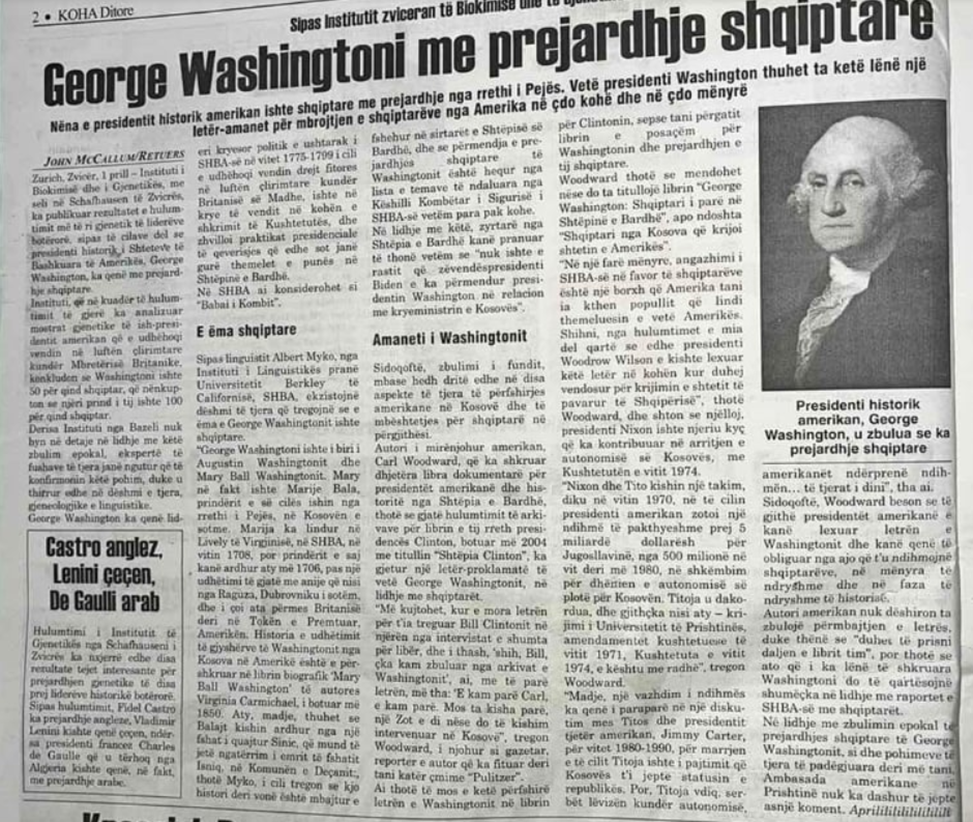
An example of this was an article in the KOHA DITORE newspaper, published on April 1, 2011, entitled “George Washington of Albanian descent.” The treatment at the time explained that the article was published as a joke for April Fools’ Day, while the word “April Fools’ Day” placed at the end of it served as an indication of this.
However, as pointed out in the hibrid.info article, this content was republished in 2016, 2019, and 2022 by online media, this time as real news.
After the publication of Hyreme Gurrë's statement, hibrid.info also encountered a post published yesterday by Flaka Surroi, leader of the KOHA group, on her Facebook account.
In her reaction, Surroi recalled that the claim about George Washington's Albanian origin was initially published as a joke by the KOHA DITORE newspaper, on April 1, 2011, and that the article ended with the word "April Fool's Day".
She criticizes the fact that this content, which was published in a humorous context, is being repeated as fact.
Regarding George Washington's ancestry, historical sources indicate that he was of English descent. Washington was born in 1732, in the colony of Virginia, in what is now the United States of America. This evidence does not support the claim that he was of Albanian descent. (see here).
Analyze
The publication presents a statement by Hyreme Gurrë, a professor and diplomat, according to which George Washington, the former first president of the United States of America, had Albanian descent from Kosovo. She claims that his mother, Mary Ball, was of Albanian descent.
However, research in the hibrid.info archive has found that this claim was published earlier, in an article in the KOHA DITORE newspaper, on April 1, 2011. This article was published as a joke for April Fool's Day, which was also evidenced by the word "April Fool's Day" at the end.
Also, after the publication of Gurrë's statement, Flaka Surroi, head of the KOHA Group, reacted through a post on Facebook, recalling that the claim was part of a joke published by KOHA DITORE on April 1, 2011. This reaction reinforces the context in which the claim was initially published.
Meanwhile, research into George Washington's ancestry shows that he was of English descent and was born in 1732, in the colony of Virginia, in what is now the United States.
Therefore, based on the working methodology, Hibrid.info assesses this content as "Unverified Content".
rationale
The "Unverified" rating is given to those informative contents that do not provide sufficient information to confirm the claims made in the report, and which could not be verified due to certain circumstances (speed, lack of sources) during the publication of the content.