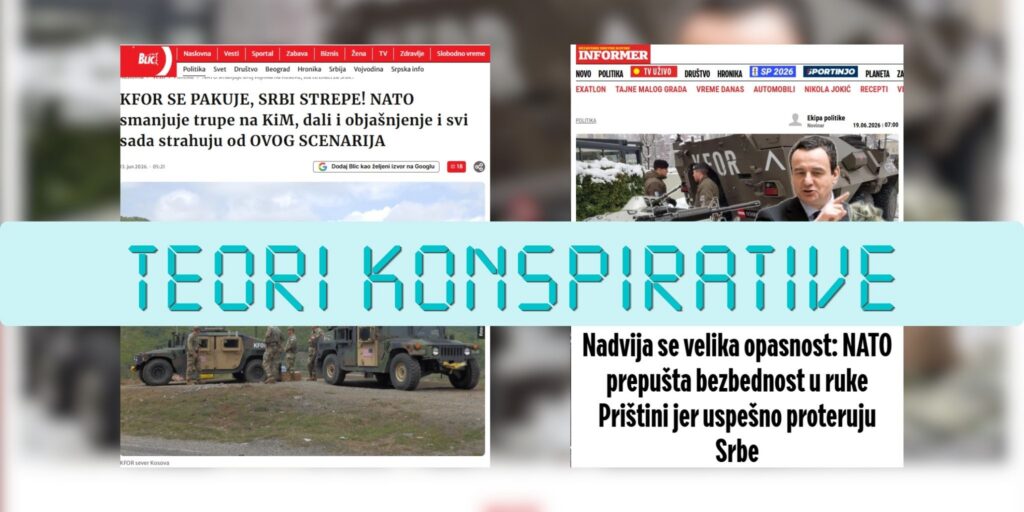

Some Serbian media outlets have reported that NATO is reducing its military presence in Kosovo and that this could mean "handing over security to Pristina," increasing insecurity for the Serbian community in the country.
These reports also suggest that this is a coordinated process leading to the gradual withdrawal of the KFOR mission.
What do the Serbian media claim?
In articles published by Inform and Blic.rs, it is claimed that NATO is reducing its military presence in Kosovo with the aim of transferring security to Kosovo institutions and that this process is linked to the increase in control of official Pristina on the ground. According to these reports, the reduction of KFOR will increase the presence of the Kosovo Police in Serb-majority areas and that there is a long-term scenario for the gradual withdrawal of the international mission.
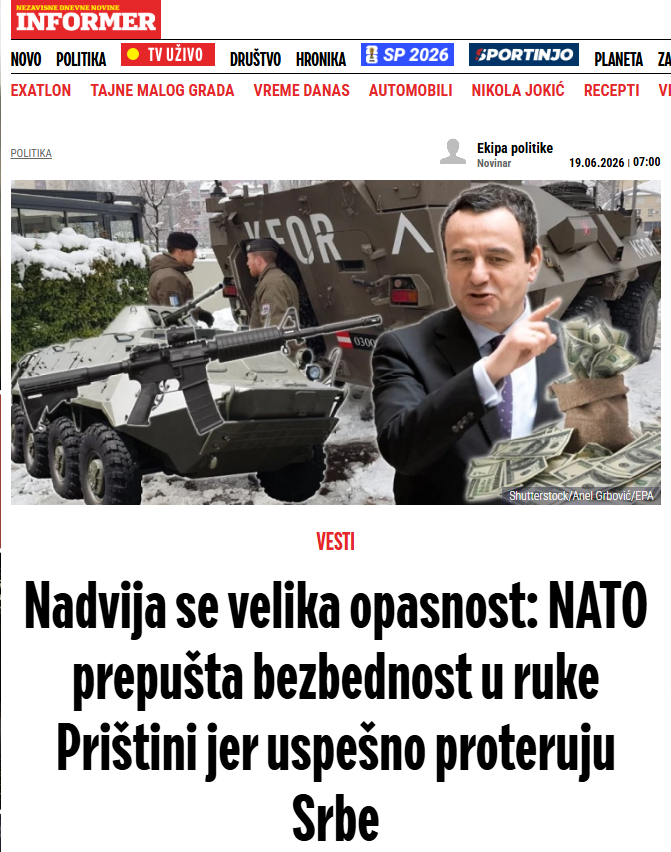
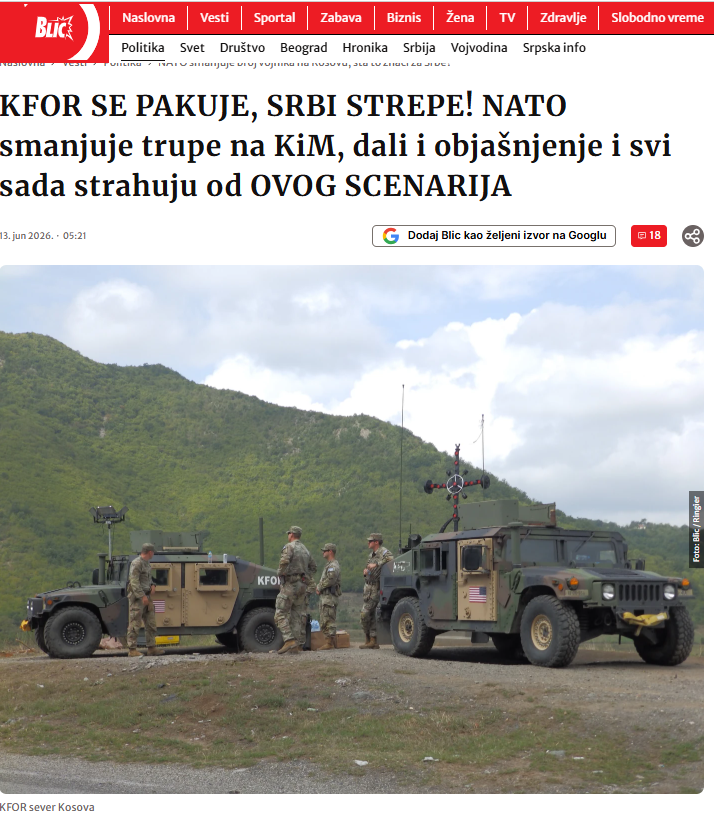
At the same time, these media outlets emphasize that the reduction of KFOR troops can be interpreted as a signal for an increased role of the Kosovo Police in the field and as a development that could affect the sense of security of the Serbian community. It is also cited that NATO has declared that the security situation in Kosovo is “stable”, which has enabled the review of the mission’s presence, while changes will be made gradually and in accordance with conditions on the ground.
However, these reports do not confirm any decision to withdraw KFOR and transfer security responsibilities to Kosovo institutions. These articles also include statements by former Serbian general Mitar Kovač, who interprets the possible reduction of NATO troops as part of a coordinated strategy to change the role of the KFOR mission.
What did NATO announce?
According to NATO's announcement, the Supreme Allied Commander Europe, General Alexus G. Grynkewich, has announced that the alliance will gradually adjust the presence of the KFOR mission over the next year, due to the improvement of the security situation in Kosovo. He stressed that NATO remains committed to security in Kosovo and that the improved stability has created opportunities to optimize the size and positioning of KFOR. According to him, the changes will be made gradually and can be reversed if the situation worsens.
NATO spokespeople have clarified that this is not about withdrawing the mission, but about optimizing its presence and structure, based on security assessments on the ground.
NATO Secretary General Mark Rutte described the reduction in the number of KFOR soldiers in Kosovo as good news. He said this comes after the security situation in Kosovo improved (see here).
The KFOR mission was deployed in Kosovo in 1999 under United Nations (UN) Resolution 1244, following the end of the war. According to published data, there are currently around 4,600–4,657 KFOR personnel from 31 countries in Kosovo, compared to around 50,000 troops in 1999. The mission is tasked with ensuring a secure environment and freedom of movement for all communities in Kosovo.
Claims that NATO is handing over security in Kosovo, that KFOR is preparing for a full withdrawal or that there is a plan to endanger the Serbian community are not supported by verifiable evidence. KFOR continues to have an active international mandate, any changes in troop numbers are a regular part of NATO reviews and there is no decision to withdraw the mission. NATO links any adjustments to its presence to the improvement of the security situation on the ground.
Analyze:
Reports from Serbian media claiming that the reduction of KFOR troops in Kosovo means preparations for a complete withdrawal or "handover of security" to official Pristina and threatens the security of the Serbian community are not supported by official facts.
NATO has made it clear that the KFOR mission remains present and any changes are made gradually and in accordance with security assessments on the ground.
Based on its work methodology, hibrid.info considers this claim to be a "conspiracy theory".
Reasoning:
"Conspiracy theories" are considered to be informational content that contains a false or unverifiable description of a phenomenon, event or person, presenting it as part or the result of a secret plan ("conspiracy"). The characteristic of these contents is that they present a series of claims, presented as facts, between which cause-effect relationships are established, without providing any reliable evidence.