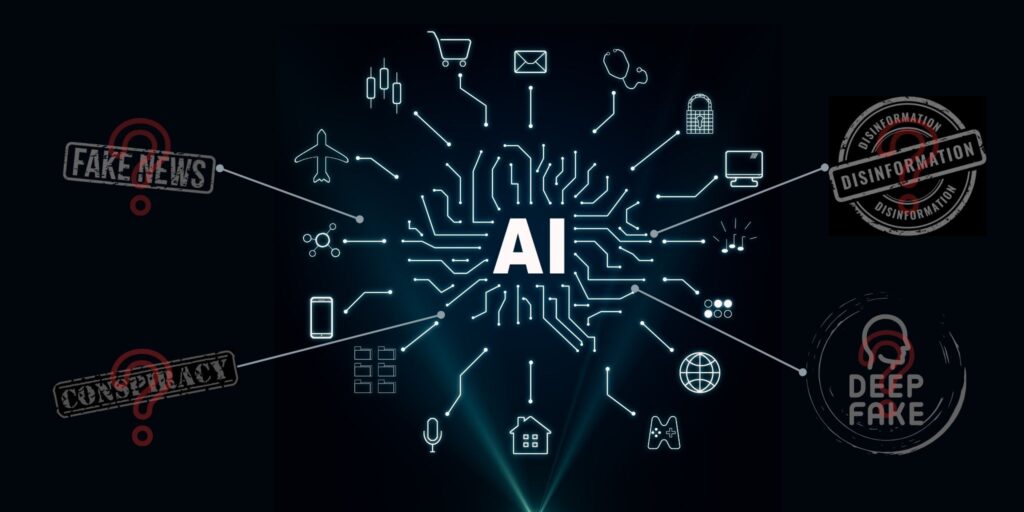

Generative artificial intelligence will make our existing problems with the spread of misinformation and disinformation even more difficult.
Text-based tools like ChatGPT can create compelling-sounding academic articles on a topic, complete with citations. that can mislead people without a background in the topic of the article. Artificial intelligence based on video, audio and images can successfully alter people's faces, voices, and even behaviors, to create apparent evidence of behavior or conversations that never happened at all.
Whereas before generative AI was widely available, it took people time and resources to create fake videos, news stories, or academic articles. Now, convincing disinformation can be created much more quickly.
New applications of critical thinking are needed
To date, one focus of teaching critical media education in both public school and post-secondary settings has been to ask students to engage deeply with a text and know it well enough to be able to summarize it, ask questions about it, and critique it. This approach is likely to be less useful in an era where AI can so easily spoof the suggestions we seek to assess quality. While there are no easy answers to the problem of misinformation, learning these three key skills will better equip us all to be more eloquent in the face of these threats.
1. Lateral reading (with a critical approach) of texts
Instead of deeply reading a single article, blog, or website at first glance, we need to equip students with a new set of filtering skills often called lateral reading.
In lateral reading, we ask students to look for clues before reading deeply. Questions to ask include: Who wrote the article? How do you know? What are the their credentials and are those credentials relevant to the topic being discussed ? What claims are they making and are those claims well supported in the academic literature?
Doing this task well implies the need to prepare students to consider different types of research.
2. Research education
In much of the popular imagination and everyday practice, the concept of search has shifted to refer to an internet search. However, This represents a misunderstanding of what distinguishes the evidence collection process.. Students should be taught how to distinguish claims based on well-founded evidence from conspiracy theories and misinformation. They need to learn how to evaluate the quality of academic and non-academic sources. This means teaching students about the quality of research, the quality of journals, and different types of expertise.
3. Technological education
Many people don't know that AI is not actually intelligent, but instead consists of language and image processing algorithms that recognize patterns and then return them to us in a random but statistically significant way.
Similarly, many people don't realize that the content we see on social media is dictated by algorithms that prioritize engagement in order to make money for advertisers. We rarely stop to think about why we see the content we are exposed to through these technologies. We don’t think about who is creating the technology and how the programmers’ biases play a role in what we see. If we can all develop a stronger critical orientation towards these technologies, asking who benefits when we are offered specific content, then we will become more resistant to the misinformation that is spread using these tools.
Through these three skills: lateral reading, search literacy, and technology literacy, we will be more resilient to misinformation of all kinds – and less susceptible to the new threat of AI-based disinformation.
Article from theconversation.com