
Wrote: Festim Rizanaj
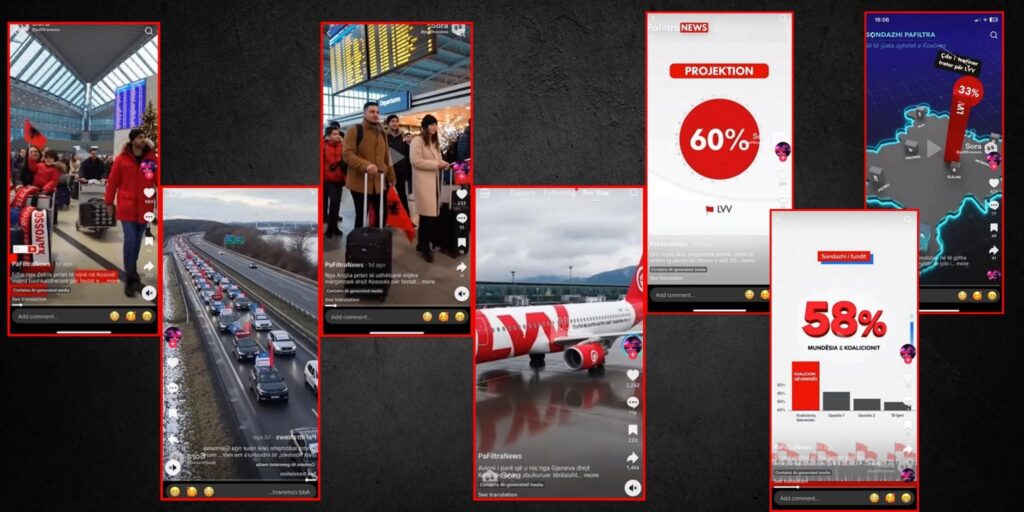
Through the style of television news reports, a TikTok account has published dozens of videos generated by artificial intelligence, receiving hundreds of thousands of views.
"NoFilterNews" publishes videos that usually feature a TV presenter, whose voice is then accompanied by various images. The latest videos are mainly related to the parliamentary elections to be held on December 28.
From the published content, it is noticeable that the content favors the political entity, the Vetëvendosje Movement.
From December 6 to 8, the account in question published 14 such videos, mentioning political parties competing in the December 28 elections.
Generation by artificial intelligence
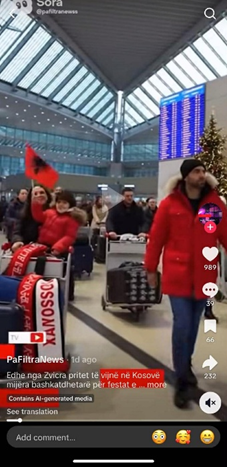
All of these posts on TikTok appear with the label “AI-Generated.” But despite this, they have received hundreds of comments, which in some cases seem to have taken the content for granted. TikTok’s description of this label states that it is applied to content that is completely or significantly edited with artificial intelligence. (See here)
In addition to the label that clarifies that they are AI-generated content, the videos also have the "Sora" logo, which is an application for generating videos with artificial intelligence.
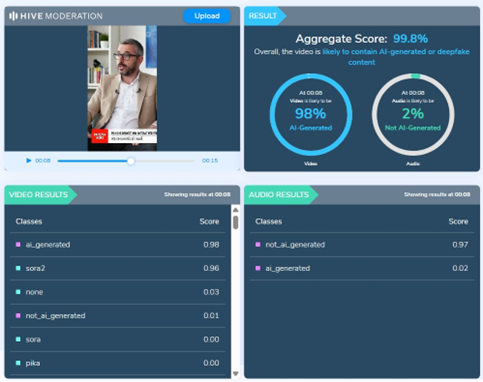
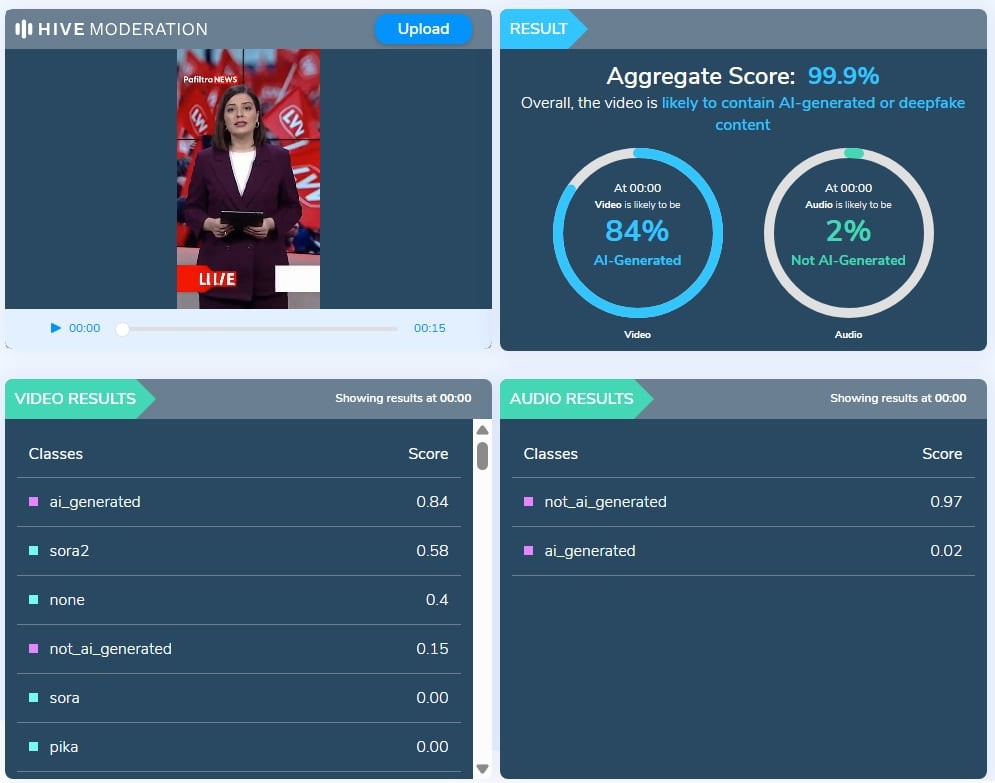
In addition to these facts, hibrid.info has also used the artificial intelligence-generated content verification platform, "Hivemoderation", to confirm that they are unoriginal content.
What do the publications contain?
In addition to images in the style of election chronicles, the content is also accompanied by descriptive texts. Some of their content is related to the claim for the participation of the diaspora in the December 28 elections, while others highlight specific parties.
Regarding publications about the diaspora, a video claims that a plane departing from Geneva to Kosovo was "entirely decorated with the inscription LVV". Another one shows hundreds of cars on a road, which according to the claim, are immigrants who have set off towards Kosovo to vote for the Vetëvendosje Movement. There have also been other publications to mobilize the diaspora for VV. (see here)
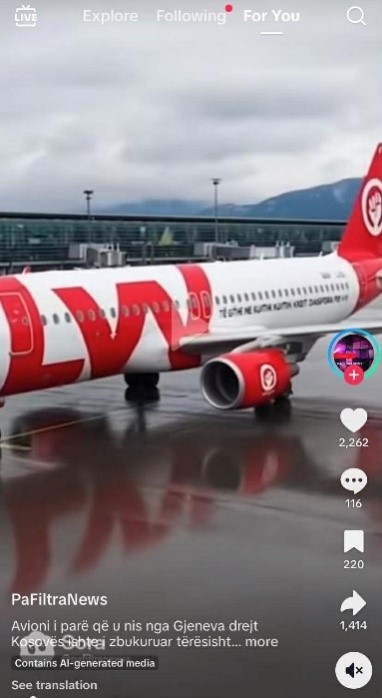
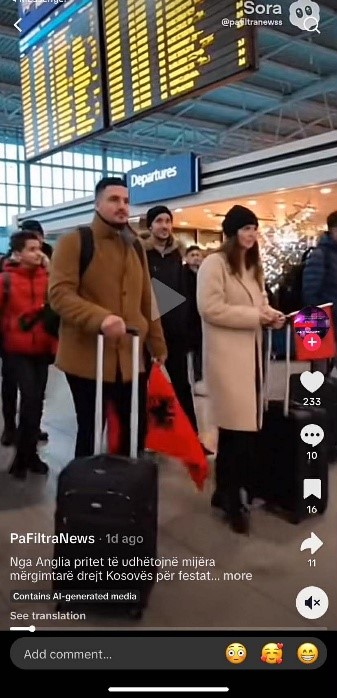
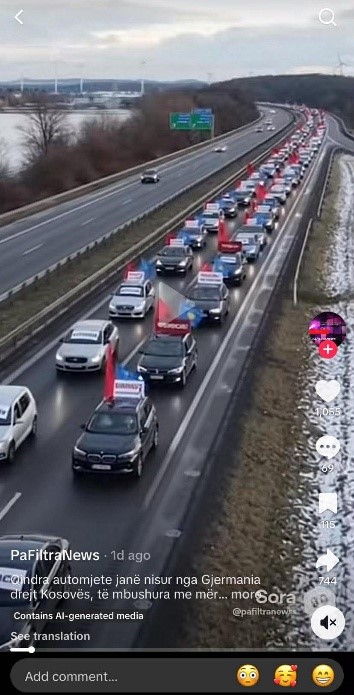
In other content, claims are made about election polls and results that show the LVV increasing compared to previous elections. In one of the publications, it is assumed that according to experts "the LVV-GUXO-Alternativa coalition has a real chance of reaching over 58% of the votes in the December 28 elections". Meanwhile, a other claims that "According to a survey conducted in all cities of Kosovo, it results that every third citizen says they are in favor of the victory of the Movement for Self-Determination! (LVV)".
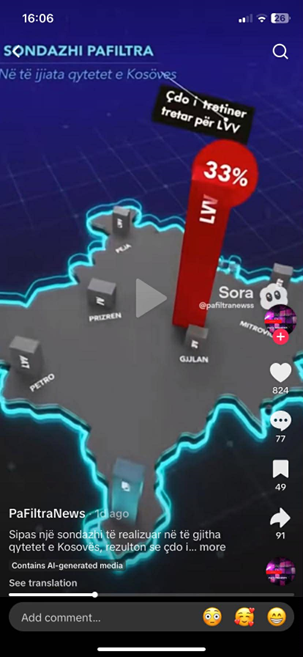
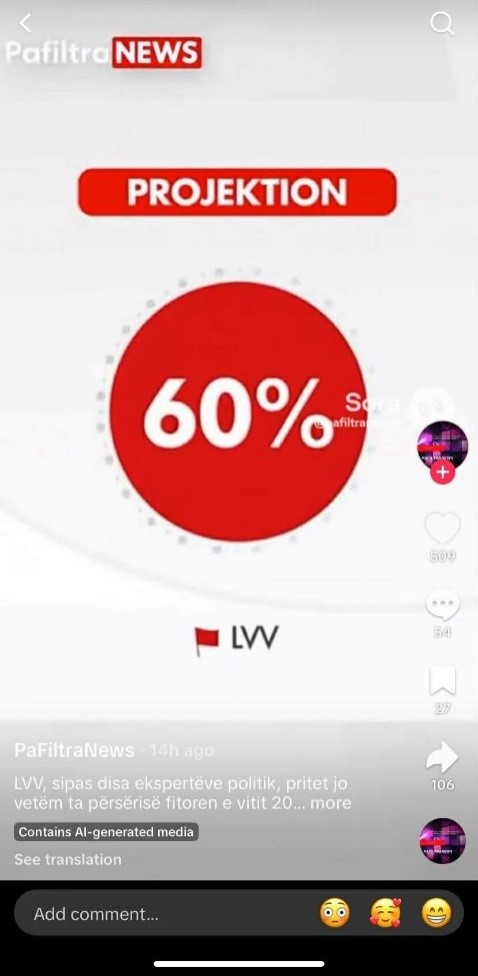
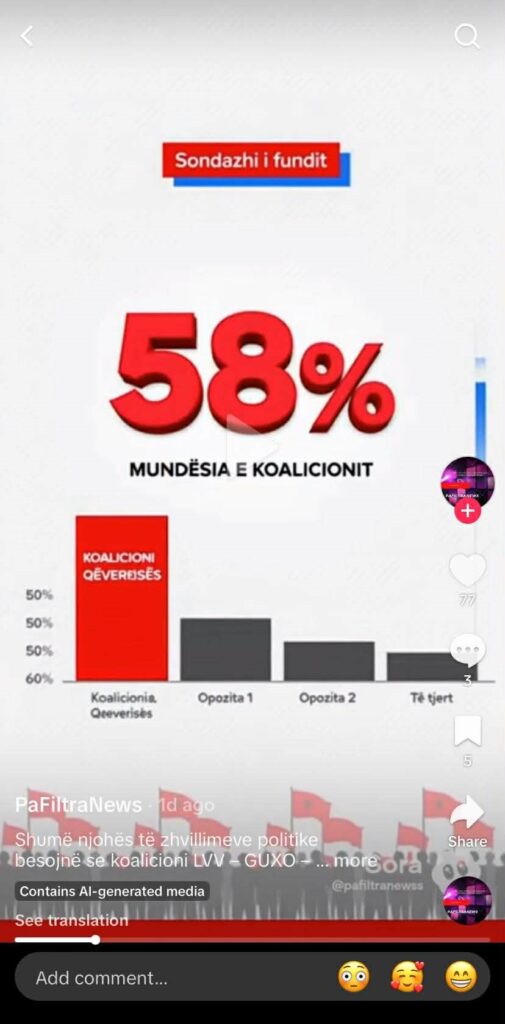
Two other videos openly display support for the Vetevendosje Movement. (see here and here)
Other content is false claims about other parties. Two of them falsely claim that the leader of the Democratic Party of Kosovo (PDK), Bedri Hamza, said that “the child allowance scheme should be reconsidered.” (see here and here)
The publisher in a rast has claimed that according to a recent poll, the two political parties, the New Kosovo Alliance (AKR) and the Social Democratic Initiative, cannot cross the electoral threshold. But while Nisma will enter the December 28 elections alone, the AKR has included its candidates within the list of candidates of the Democratic League of Kosovo. (See here)
The content is accompanied by spelling errors in many cases.
According to estimates, these treated contents have received more than 200 thousand views by the time of treatment. They have also received over 7000 likes and nearly 500 comments.
Hibrid.info has verified several cases where artificial intelligence is creating false content on the issue of elections. (see here, here, here, here and here)
The context of these videos
The elections, set on the eve of the end-of-year holidays, sparked a strong political debate, as part of the discourse interpreted this date as a strategic move to exploit the presence of the diaspora. Meanwhile, counter-arguments emphasized the increasing pluralism of the diaspora vote, turning this community into the center of political attention. In this context, the diaspora began to appear repeatedly in digital narratives in the form of fake interviews and television chronicles, alleged images from airports and long columns of cars on the streets – which were presented as migrants heading en masse to Kosovo to vote. This content aimed to create the idea of an extraordinary mobilization and a unified political sentiment within the diaspora.
At the same time, social networks were flooded with videos and images generated with Artificial Intelligence, designed with a high level of professional imitation. AI-created characters are interviewed with microphones holding the logos of well-known Kosovar media outlets (often with slight visual distortions), giving the content a false layer of authenticity and making the user assume that they are watching real television material. These deepfakes present fabricated interviews, fake polls and non-existent statements, manipulating public perceptions of political support and reinforcing the narrative of a massive diaspora mobilization. Despite the signs of manipulation, high interaction with this content amplifies it in the public discourse, fueling polarization and directly influencing the political atmosphere ahead of December 28.