
Full article at phys.org
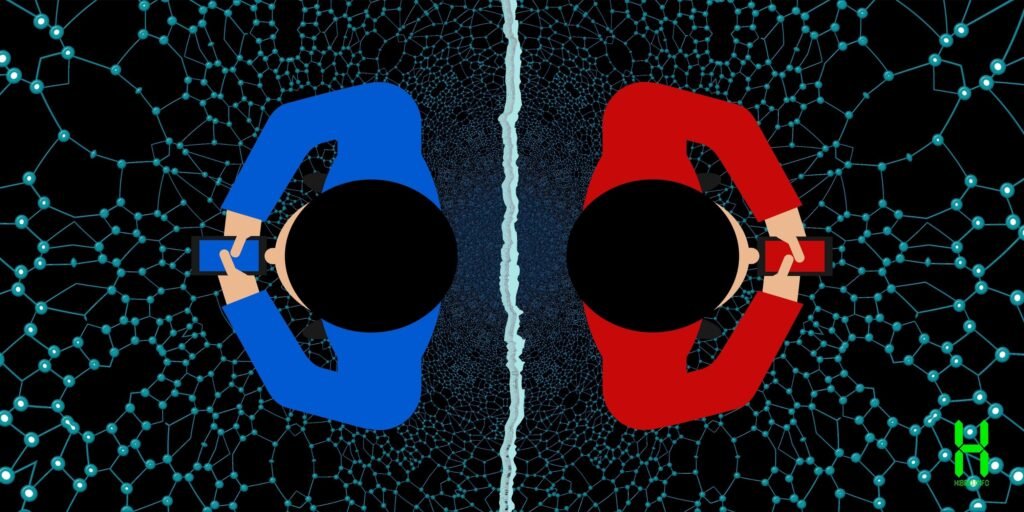
Social media posts about the “political outgroup” – criticizing or mocking those on the opposing side of an ideological divide – receive twice as many shares as posts defending people or organizations of the same political orientation.
This is according to a study led by psychologists at the University of Cambridge, who analyzed over 2.7 million Tweets and Facebook posts published by American media or members of Congress from across the political spectrum.
The researchers also found that each additional word referring to a rival politician or competing worldview (e.g. 'Biden' or 'Liberal' if coming from a Republican source) increases the chances of a social media post being shared by an average of 67% across the entire dataset.
These effects were found to be the same on both platforms, regardless of political orientation. The findings were published today in the journal Proceedings of the National Academy of Sciences.
Previous research investigating online “virality” found that using highly emotional language increases the likelihood of social media shares – especially negative emotions like anger or when it conveys a sense of moral indignation.
However, the latest study shows that the use of terms related to the “political outgroup” is almost five times more effective than negative emotional language and almost seven times more effective than moral emotional language, in the number of distributions.
In fact, when looking at the use of emojis as reactions on Facebook, it was found that – on average – posts about political opponents attracted over twice as many angry face emojis as posts about the “group” that gained in heart-related emojis.
This is emblematic of the problems with efforts to address widespread political hostility, researchers say. Changing algorithms to value “deeper” engagement, like reactions and comments, in the hope of bringing people together – as Facebook announced in 2018 – may actually prioritize posts full of “out-group hostility.”
The scientists argue that their findings highlight the “perverse incentives” that now drive discourse on major social media platforms, which in turn could fuel political polarization that threatens democratic processes in the US and elsewhere.