
Wrote: Etrit Rexhepi
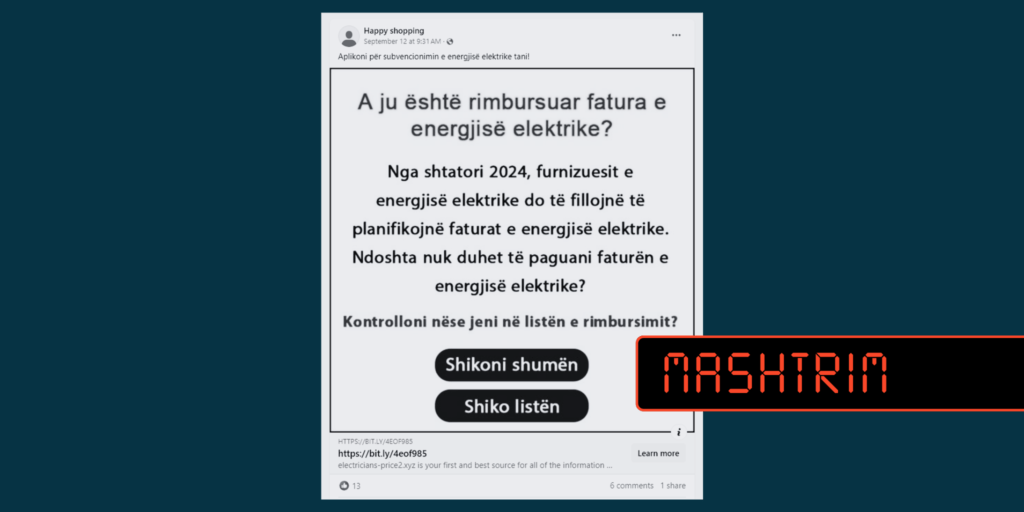
A piece of content is published with the caption, claiming that the application for electricity subsidies begins in September.
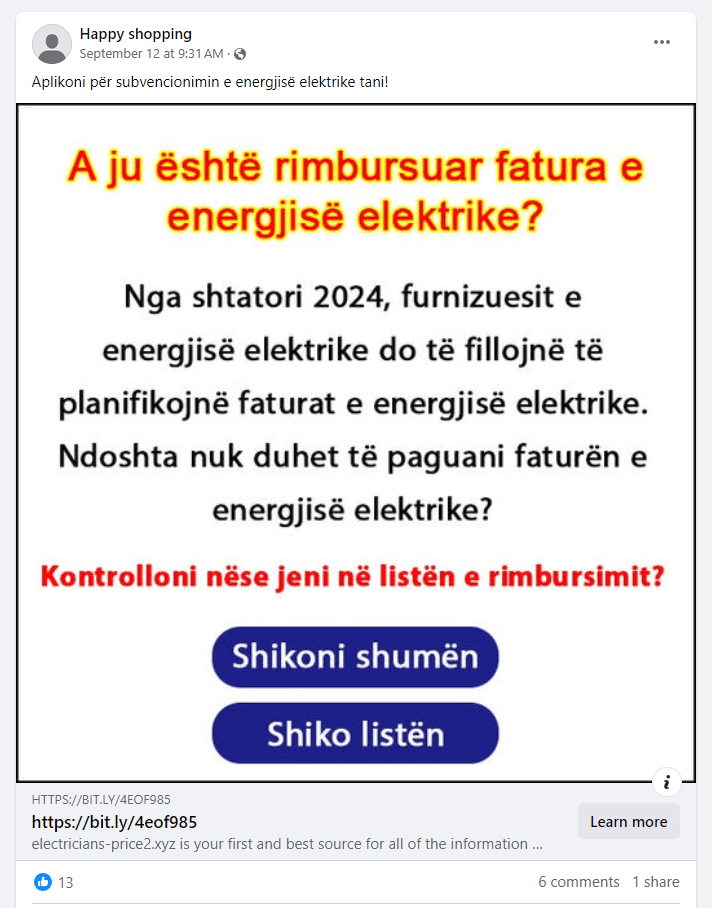
This post was published through a link in the form of an image, published (September 12) as sponsored by a page called "Happy shopping", on Facebook.
Is the claim correct?
Hibrid.info has found that the only option for reimbursement of electricity bills is to apply for vulnerable families, which have begun to be subsidized since January of this year.
Link published in image form from the “Happy shopping” page on Facebook (see here)
After clicking on the above link, Hibrid.info found that the displayed website does not provide any application opportunities for what is claimed in the announcement. From the information presented, the name of the institution, organization or business that the website represents is missing and no connection to the institutions of Kosovo is proven (see here).
The credibility of this website's domain is also proven by the platform that assesses the credibility of websites, "ScamAdviser.com". Hibrid.info has found that the data shows that the checked website has low credibility (see here).
While in the timeline of the Facebook page, which published the alleged announcement, no post was noticed (here), while data about the activity is missing (here).
Hibrid.info has found that the opportunity for official institutions to reimburse electricity bills was offered to vulnerable families, who have started receiving subsidies since January of this year (see here).
A similar claim was addressed by hibrid.info once again (see here).
Analyze:
The claim that there is an opportunity to apply for reimbursement of electricity bills is untrue.
The publisher of the announcement is suspicious, while the opportunity for bill reimbursement is only offered to vulnerable families by the Ministry of Finance.
Based on its work methodology, hibrid.info assesses the content as "Fraud".
Reasoning:
The “Deception” rating is given to informational content that is manipulated in terms of visual (deepfake, cheapfake), audio, or textual content to deceive the audience. This form of deception is usually used to produce false and manipulated content.