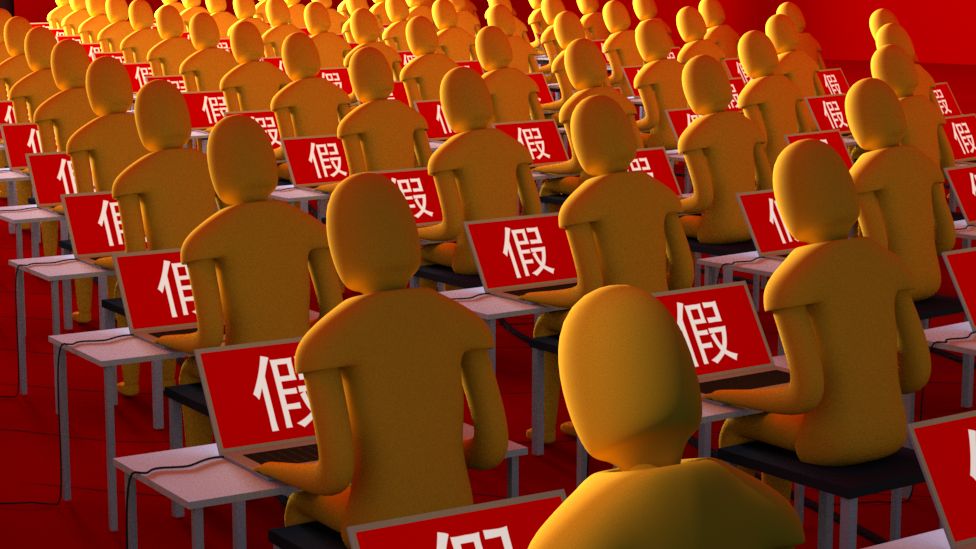

A widespread network of more than 350 fake social media profiles is pushing pro-China narratives and attempting to discredit those seen as opponents of the Chinese government, according to a new study.
The aim is to delegitimize the West and increase China's influence and image abroad, the report by the Center for Information Renewal (CIR) suggests.
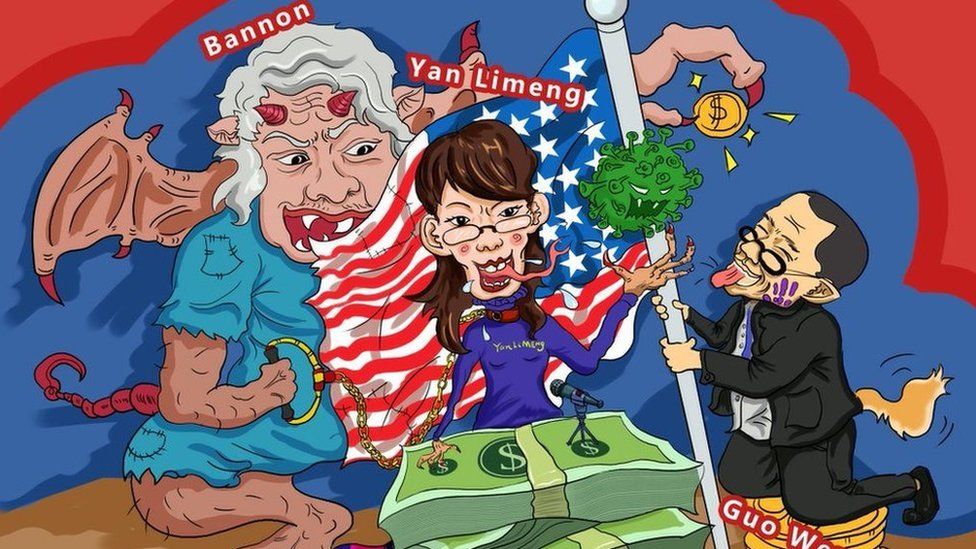
The study, shared with the BBC, found that the network of fake profiles distributed cartoons depicting, among others, exiled Chinese tycoon Guo Wengui, an outspoken critic of China.
Other controversial figures depicted in the cartoons included “signaling” scientist Li-Meng Yan and Steve Bannon, former political strategist for Donald Trump.
Each of these individuals has been accused of spreading misinformation, including false information about Covid-19.
Some of the accounts – spread across Twitter, Facebook, Instagram and YouTube – use fake profile pictures created with the help of Artificial Intelligence, while others appear to have been caught after previously posting in other languages.
There is no concrete evidence that the network is linked to the Chinese government, but according to CIR, a nonprofit group that works to counter disinformation, it resembles pro-China networks previously removed by Twitter and Facebook.
These networks reinforced pro-Chinese narratives similar to those promoted by Chinese state representatives and state media.
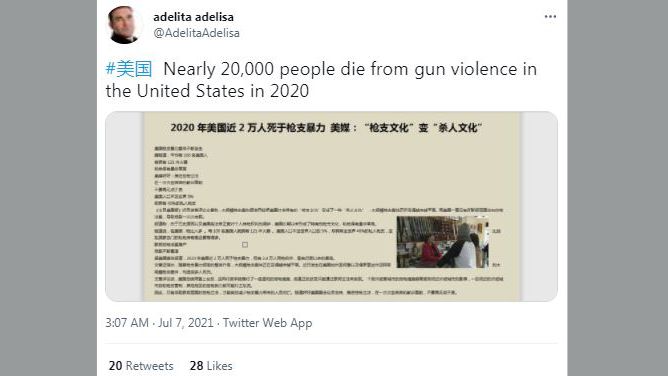
Much of the content shared by the network focuses on the US, and in particular on divisive issues like gun laws and racial politics.
One of the narratives promoted by the network portrays the US as having a poor human rights record. Posts from fake accounts cite the killing of George Floyd among examples, as well as discrimination against Asians.
Some accounts consistently deny human rights abuses in the Chinese province of Xinjiang, where experts say China has detained at least a million Muslims against their will, calling the allegations "lies fabricated by the United States and the West."
“The network’s goal appears to be to delegitimize the West by reinforcing pro-Chinese narratives”, said Benjamin Strick, author of the CIR report.
There are strong similarities between this network and the so-called “Spamouflage Dragon” propaganda network identified by social analytics firm Graphika.
Commenting on the new study, Ira Hubert, a senior investigative analyst at Graphika, said: “The report shows that on American platforms, there was no ‘honeymoon’ in the first months of the Biden administration.”
"The network featured a consistent mix of anti-American content, for example cheering the US 'loss' ahead of its withdrawal from Afghanistan and depicting the US as a poor ally whose aid to India was inadequate during some of its worst months fighting Covid."
How was the network discovered?
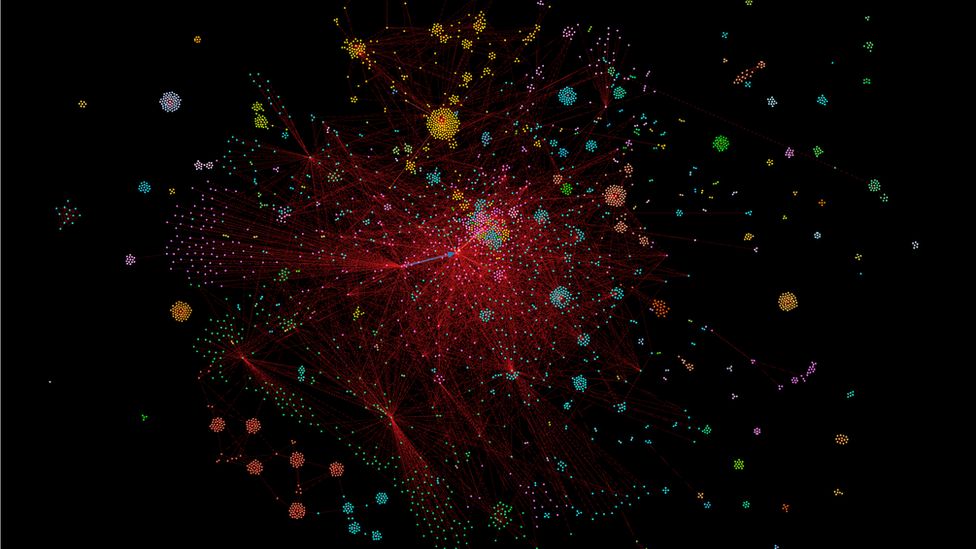
CIR had mapped the hashtags favored by previously identified networks, revealing more accounts that showed signs of being part of an influence operation.
Telltale signs included high levels of activity pushing propaganda narratives and repeated use of the same hashtags. Newly created accounts, accounts with usernames that appeared to be randomly generated, and accounts with very few followers also raised red flags.
Some profiles were created to post original content, while others only shared, liked, and commented on those original posts, to help them reach a wider audience.
This type of activity is often called “astroturfing” because it is designed to create the appearance of a community-level campaign.
(full article from BBC in English)