
Wrote: Festim Rizanaj
The Kosovo Security Force received thousands of “Skydagger” kamikaze combat drones from Turkey on October 8. The news was announced by the Government of Kosovo and the acting Prime Minister, Albin Kurti. In the official statement published on the website “prime minister.rks-gov.net", Kurti was quoted as saying that "today is a happy day for the Kosovo Security Force and an extraordinary one for the protection of state sovereignty and territorial integrity of the Republic of Kosovo."
But political and institutional leaders in Serbia have interpreted Turkey's supply of drones to Kosovo as destabilizing the region. They have also accused Turkey of "not wanting stability" and "dreaming of the return of the Ottoman Empire." According to them, arming Kosovo is a "threat to peace and the Serbian people."
Narrative: “Turkey is stirring up tensions and trying to restore Ottoman influence in the Balkans”
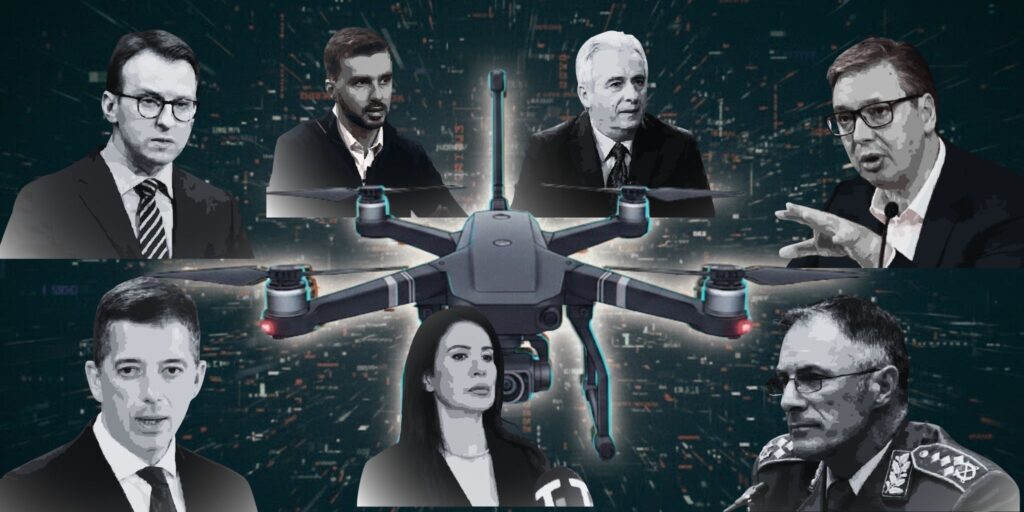
Regarding this development, the President of Serbia, Aleksandar Vučić, reacted, saying: in a post on the “X” platform interpreted this as a threatening action towards Serbia and the region, accusing Turkey of contributing to the destabilization of the Western Balkans and aiming, as he said, "to restore the influence of the Ottoman Empire."
"I am appalled by Turkey's behavior and brutal violation of the UN Charter and UN Security Council Resolution 1244, as well as the continued arming of the Pristina authorities. It is now completely clear that Turkey does not want stability in the Western Balkans and is once again dreaming of the return of the Ottoman Empire. Serbia is a small state, but we have clearly understood the message."
Serbian President Aleksandar Vučić's statement was widely disseminated in several Serbian-language media outlets. Most of them reported with headlines that highlighted Vučić's claim of "violation of Resolution 1244" by Turkey and Kosovo, while some portals highlighted the part where he accuses Turkey of aiming to "restore the Ottoman Empire" (see here, here, here, here, here, here, here and here).
In several other cases, the media presented Kosovo’s supply of drones as “preparation for war,” fueling an alarmist narrative about potential tensions in the region (see here and here).
Meanwhile, the president of Kosovo, Vjosa Osmani, reacted on the "X" platform to Aleksandar Vučić's statements, emphasizing that Turkey is supporting Kosovo in maintaining peace and that Kosovo's actions are defensive in nature. She underlined the importance of defense cooperation according to NATO standards to guarantee security and stability for citizens.
"On the same day that President Trump praised Turkey and President Erdogan for their extraordinary leadership in promoting world peace and security, Vucic shamelessly attacks Turkey, a country that, as a NATO member state, is helping us keep the peace."".
"We will continue to strengthen ties with NATO allies, modernizing our defense capabilities based on NATO standards, ensuring peace and stability for our people and actively contributing to overall security".
Likewise, Kosovo authorities have repeatedly emphasized that the Kosovo Security Force has defensive, not offensive, purposes. Prime Minister Albin Kurti has emphasized that any purchase of military equipment is made to strengthen the state's defense capacities and to ensure peace and stability for the citizens of Kosovo. (see here)
Narrative: “The arming of Kosovo, a threat to peace and to the Serbian people”
The director of the Office for Kosovo in the Government of Serbia, Petar Petkovic, reacted to President Osmani. Through a post on X, Petkovic has claimed that this armament does not have defensive or democratic purposes, but to intimidate and threaten Serbs.
"Behind Vjosa Osmani's meaningless sophisms about the reasons for Turkish armament, Pristina hides a simple truth. Kurti is not buying weapons systems for the sake of democracy and security, but to intimidate and threaten. Aggression is the only policy to which the separatists in Kosovo have consistently committed."
Besides writing in X, also in website of the Office for Kosovo in the Government of Serbia, a reaction by Petkovic has been published. There, too, Turkey has been accused of violating the UN Charter and of being "Kurti's partner in undermining peace and stability in the Western Balkans region”. In the statement, Petkovic claims that the arming of Kosovo institutions and the supply of combat drones are directed against the Serbian people, accusing Prime Minister Albin Kurti of using these devices to intimidate and suppress the Serbian community. He claims that the delivery of the drones a few days before the October 12 local elections in Kosovo is not a coincidence, but rather a political support for Kurti who, according to him, intends to continue “terror against Serbs”.
Petković's reactions were distributed in various Serbian-language media (see here, here, here, here, here, here, here and here).
He has also given interviews where he has reiterated these claims, claiming that Turkey is heavily supplying Kosovo and linking this to a “danger to the region”, including the Kosovo-Albania-Croatia military agreement (see here). Unfounded positions related to this interstate military agreement and the supply of drones to Kosovo have also been expressed by political commentators in Serbia (see here).
This claim reiterates the narrative that the countries surrounding Serbia do not aim for stability in the region and cooperate among themselves, supplying themselves with weapons from other parties. (here)
Serbian Foreign Minister Marko Djuric reacted to the X writing that “the decision of the Turkish authorities to supply lethal weapons to the Kurti regime constitutes pouring gasoline on the fire and a clear example of malicious interference in regional affairs with destabilizing consequences.” According to him, Turkey’s action “encourages policies of aggression against Serbs and other non-majority communities in Kosovo.”
This reaction was also published in several Serbian-language media (see here, here, here, here, here and here).
The chairman of the Serbian Parliamentary Committee for Defense and Internal Affairs, Milovan Drecun, has made similar claims. He said that “drones can only be used against the Serbian people and are a preparation for a conflict” with Serbian security forces (see here, here, here and here)
Danijela Nikolic, chairwoman of Serbia's Parliamentary Commission for Kosovo, has said that "those who want war and conflict are Pristina and Albin Kurti." According to her, this is "a war of the greats." She has claimed that American influence will decline in some parts of the world and that Turkey is trying to extend its influence (see here and here).
The supply of drones to Kosovo has also prompted other reactions with accusations within politicians in Serbia. The leader of the "Kreni-Pormeni (Move-Change)" movement, Savo Manojlović, has said that Kosovo is being armed by "Vučić's great friend", referring to Erdogan (see here and here).
The Chief of the General Staff of the Serbian Army, General Milan Mojsilović, also protested against the supply of Turkish drones to Kosovo, in a conversation with the Commander of KFOR, Major General Ozkan Ulutaš. In the conversation, which was called urgent, he said that the supply of weapons to Kosovo "It is a very bad signal and threatens not only the security situation in Kosovo, but also in the entire Western Balkans region.". He too has accused Turkey of violating the UN Resolution (see here).
Officials such as Petar Petkovic, Marko Djuric, Milovan Drecun and Danijela Nikolic claim that the drone supply is aggressive in nature and will be used against the Serbian community in Kosovo. The message of Serbian officials is to reinforce the perception that Kosovo is arming itself to intimidate Serbs and as such is a destabilizing factor in the region.
Analysis of the facts on the dominant narratives of Serbian officials
The two main narratives of Serbian officials regarding the drones from Turkey are: the violation of UN Resolution 1244 and the presentation of the arming of Kosovo as a threat to peace and Serbs in the region.
Resolution 1244 does not prevent the supply of weapons to Kosovo. Although it maintains the interim international security framework, Kosovo declared independence in 2008 and has secured international recognition, as well as signed bilateral military and armament agreements with NATO member states. (see here and here).
The purchase of drones does not violate KFOR's mandate and does not constitute prohibited militarization. According to Law on the Kosovo Security Force, the KSF has certain competencies and principles. These include only the aspects of protecting the sovereignty and territorial integrity and interests of Kosovo.
Kosovo has also reached agreements for the purchase of weapons with other NATO countries and has been doing so for several years, since three laws were adopted in December 2018 for the transformation of the KSF into an army. Shortly after the adoption of the transformation laws in 2018, Kosovo was supplied with military vehicles from the United States of America. Several Humvee-type vehicles had arrived in Kosovo. The government had signed a contract with the American company AM General. 27 military vehicles were donated by the United States and 24 were purchased by Kosovo. (see here)
In August 2021, the US Government donated another 55 ASV (Armoured Security Vehicle) vehicles to Kosovo (see here). And former Defense Minister Armend Mehaj, in a Facebook post on Thursday (October 9), said that the "state-by-state, in accordance with NATO practices" purchasing system was used for the purchase of strategic capacities (see here).
There have never been any reports in the international media that the Kosovo Security Force has undermined stability in the region.
KFOR is the North Atlantic Treaty Organization (NATO) mission in Kosovo. Its troops are mandated to provide a secure environment and freedom of movement for all communities in Kosovo. Their mandate stems from United Nations Security Council Resolution 1244, which called for the withdrawal of all Serbian forces from Kosovo and the entry of international peacekeeping troops (See here).
After the transition of the KSF into the army through laws, the then Prime Minister of Kosovo, Ramush Haradinaj, said that "The KSF will not replace KFOR"and that the KSF is ready to serve alongside KFOR forces."
The US had considered it Kosovo's sovereign right to transform the KSF into a force "with a mandate for territorial defense" (see here).
The facts show that the claims of Serbian officials regarding the supply of drones to Kosovo by Turkey are not based on reality. Resolution 1244 does not prohibit the supply of weapons to Kosovo, while Kosovo, since its declaration of independence in 2008, has secured international recognition and signed bilateral military agreements with NATO member states. Moreover, the goals of the Kosovo Security Force are defensive and not offensive, as emphasized by the Kosovo authorities and President Vjosa Osmani. In this context, Serbia’s narratives that present the supply of drones as a violation of Resolution 1244 or as a threat to the region remain unfounded and at the level of a political narrative without factual arguments.