
Wrote: Fatbardh Dema
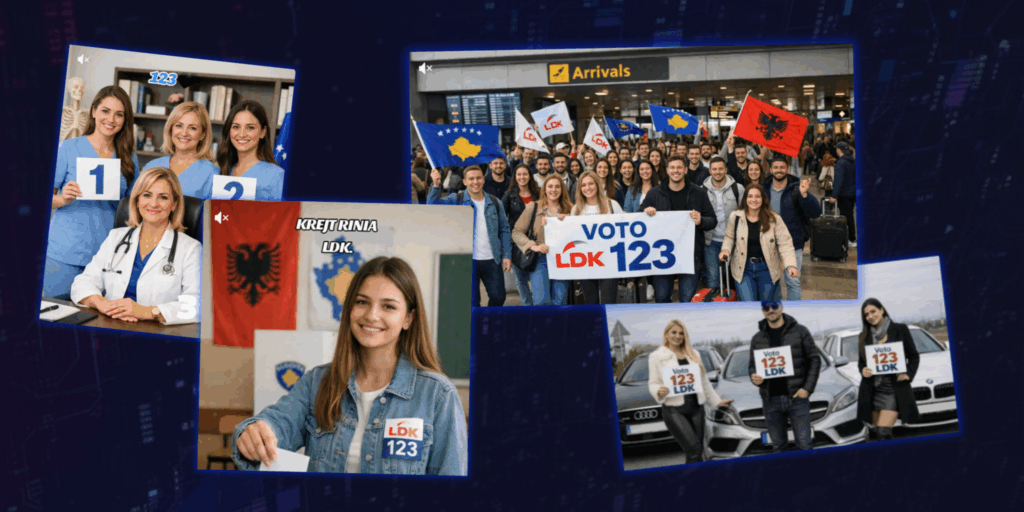
TikTok account "imp3rial.aura"has published four pieces of content (images) through which it claims that they show expatriates who have decided to vote for the Democratic League of Kosovo (LDK) in the December 28 parliamentary elections.
What's wrong with this content?
After fact-checking conducted by hibrid.info, it was confirmed that the images are not real. They were created through artificial intelligence.
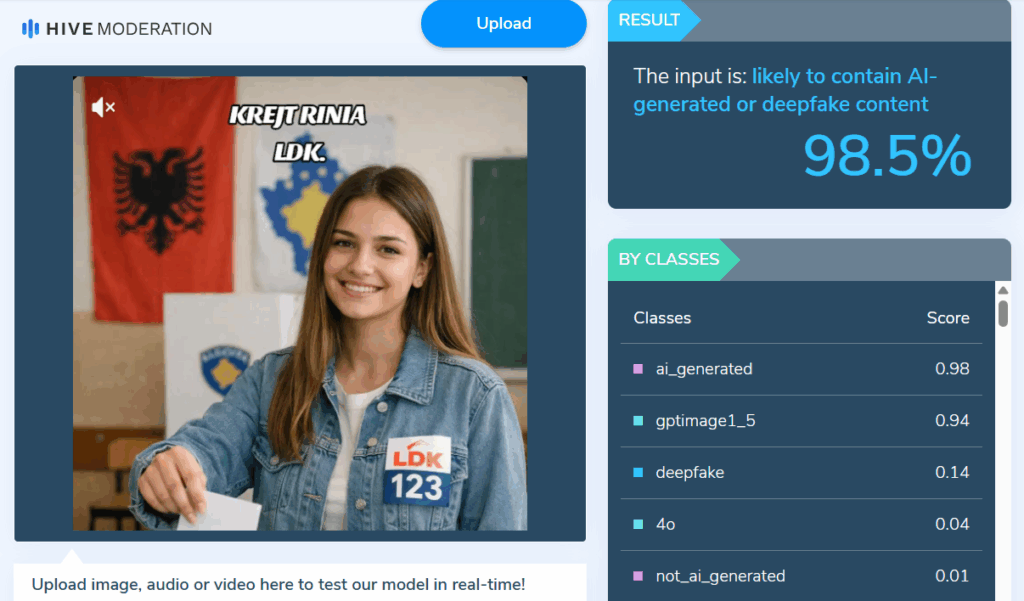
The first content published with this claim shows a girl voting, while the description states "18 year olds vote for LDK.123🖤All LDK MISSES". (see here)
After verification through the artificial intelligence image detection platform (HiveModeration.com), it was proven to be created with AI with a percentage of 98.5. (see photo below)
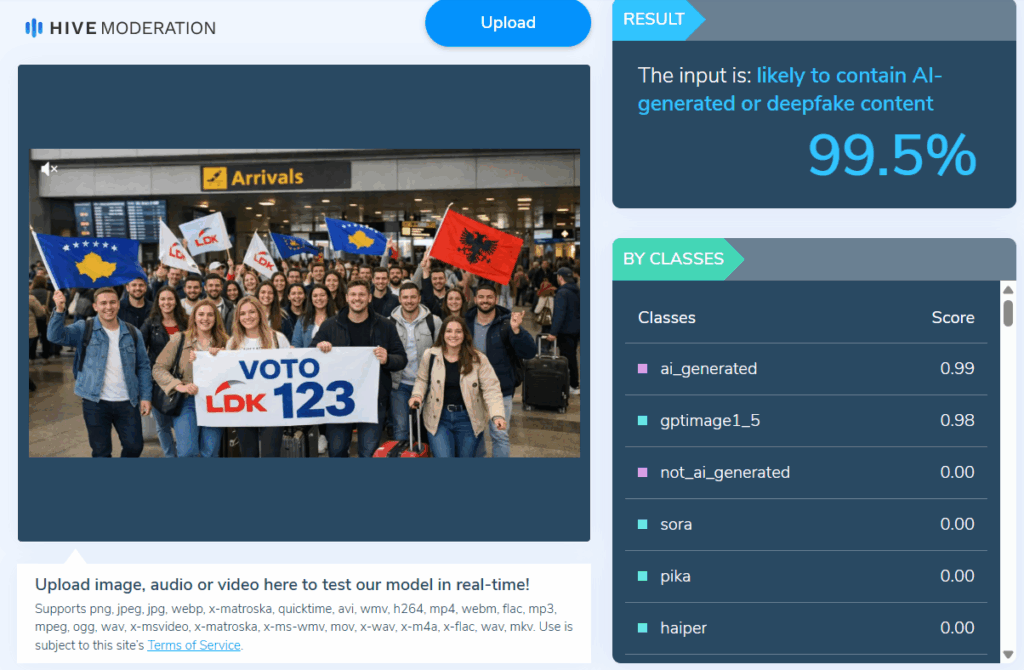
The second content, which is in the image several people holding the flag with the LDK logo in their hands and in the background are views of the airport, it was created by AI with a percentage of 99.5. (see photo below)
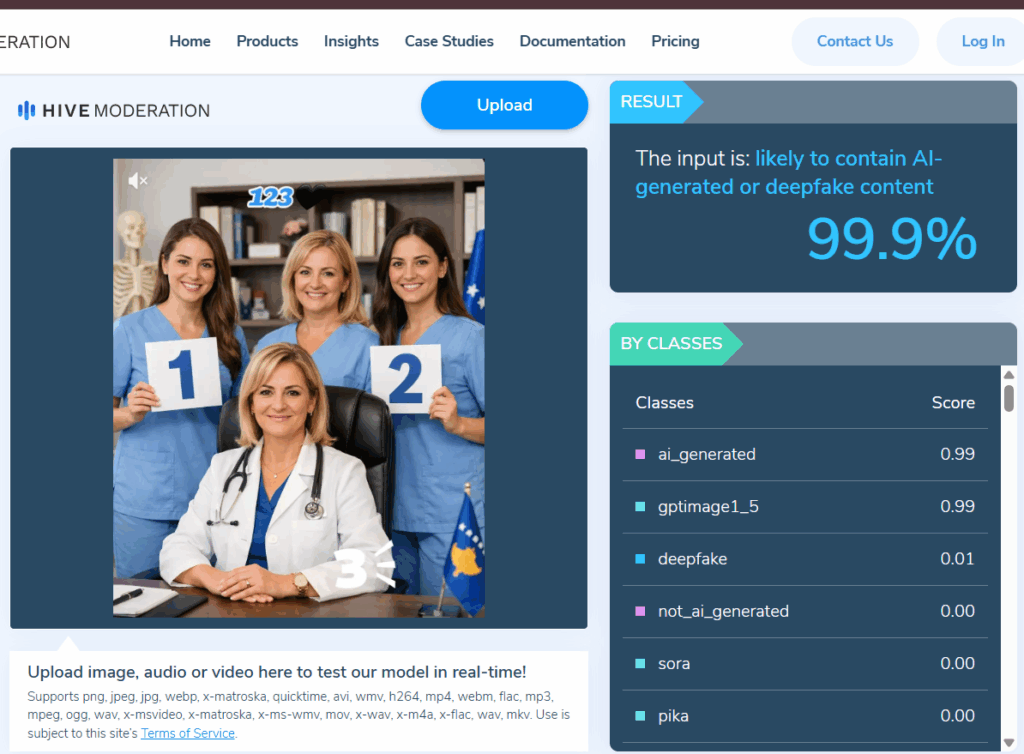
The next image that appears 4 women dressed in nursing uniforms and the inscription bears the LDK slogan for the December 28 elections "I choose hope", it was also created by artificial intelligence with a percentage of 99.9. (see photo below)
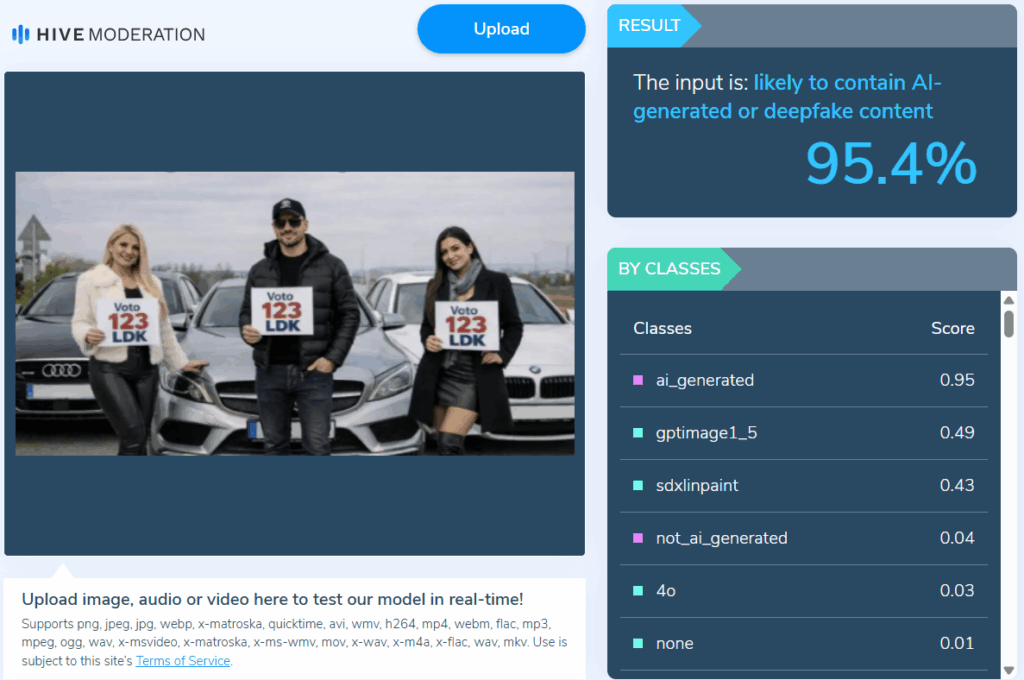
Likewise, the image it displays 3 people holding the LDK logo in their hands, as well as the description "The Exile is ready", was generated by AI with 95.4%. (see photo below)
Together, these contents, as of the writing of this article, have managed to accumulate nearly 22 thousand views, 57 comments, and 1323 likes.
Hibrid.info has previously covered visual content generated by AI, through which it was claimed that immigrants came to Kosovo to vote for and against Albin Kurti. (see here and here)
Analyze:
Four images with electoral content have been published by a TikTok account, claiming to show expatriates who have decided to vote for LDK.
Verification shows that this content is not real and that it was generated with artificial intelligence.
Based on its work methodology, hibrid.info assesses this content as "Fraud".
Reasoning:
The “Deception” rating is given to informational content that is manipulated in terms of visual (deepfake, cheapfake), audio, or textual content to deceive the audience. This form of deception is usually used to produce false and manipulated content.