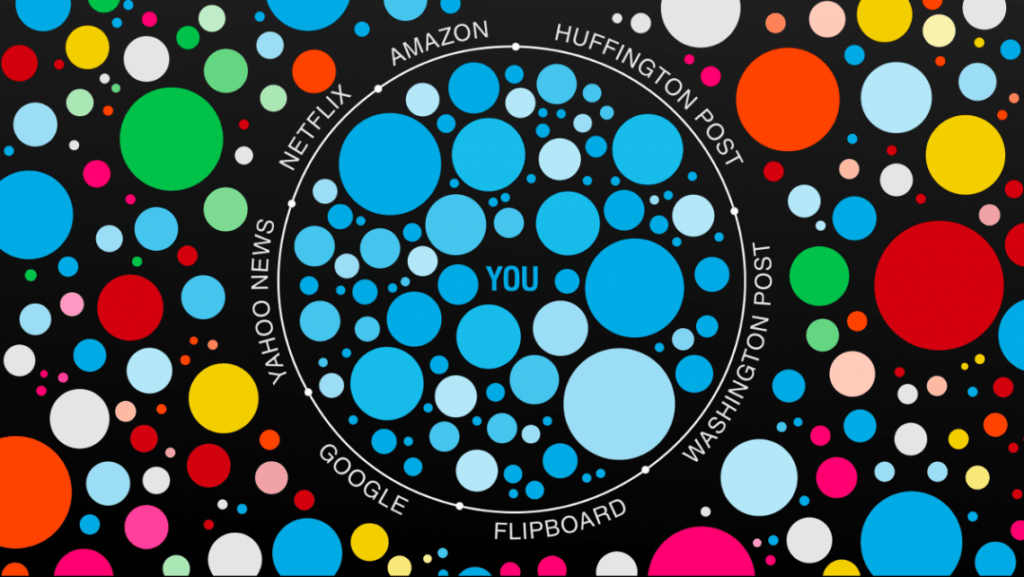

Take a moment to look at your social circle in real life and in the virtual world. Do you only surround yourself with people who share your beliefs and convictions? On social media, does it seem like everyone is reacting the same way to an event? If so, be careful! You may be living in an echo chamber or a filter bubble!
An echo chamber is an environment where a person only encounters information or opinions that mirror and reinforce their own. Echo chambers can create misinformation and distort a person's perspective, making it difficult for them to consider opposing views and discuss complex topics. They are fueled in part by confirmation bias, which is the tendency to favor information that reinforces existing beliefs.
Echo rooms can occur anywhere information is exchanged, whether online or in real life. But online, almost anyone can quickly find like-minded people and perspectives through social media and countless news sources. This has made echo rooms more numerous and easier to fall into.
Filter bubbles
When you visit a website, you might think you’re getting the same content as everyone else. But almost everywhere you go on the internet, algorithms keep track of what you want to click on or have already clicked on. These algorithms serve you content based on what they think you’ll like, and they’ll keep doing so until they’re mostly showing you the content you’ll consume. This process can lead to the creation of a filter bubble.
When you first think about algorithms personalizing and curating your online experience, it might sound like a good thing. With so much information online, you couldn't possibly consume it all, even if you had all the time in the world. Besides, we each have specific interests, so why not focus on the content we're likely to enjoy?
The problem is that these algorithms can put you in a filter bubble, a term coined by internet activist Eli Pariser. Being in a filter bubble means that these algorithms have isolated you from information and perspectives that you haven't already expressed interest in, which means you can miss out on important information.
Isolating your online experience
For example, a social media site might hide posts from friends with different views, or a news site might show articles it thinks you’ll agree with. You might not even realize you’re in a filter bubble because these algorithms don’t ask your permission, don’t tell you when they’re active, or don’t say what they’re getting from you. In fact, they’ve become part of the Internet as a whole, and if you want to access the Internet, avoiding them is nearly impossible.
How do we deal with bubbles and filter algorithms, especially when they are so common? And how do we make sure we are learning other perspectives when we don't even know what we are missing? Companies like Google and Facebook are working on solving this problem, but for now there is no definitive solution.
Until then, keep filter bubbles in mind as you browse the internet and constantly seek out new sources and perspectives. Hopefully, by doing so, you will be able to take back control of your online experience.
How does a reverberation chamber differ from a filter bubble?
An echo chamber is the way in which we only receive information from like-minded people. A filter bubble is a space where our previous online behavior (search history, likes, shares, and shopping habits) influences what we see online and in our social media feeds.
Knowing the echo chamber
Echo rooms can be tricky to recognize, especially if you're in one. If you ever think a social group or website might be an echo room, stop and think about a few questions:
- Do they tend to give only one perspective on an issue?
- Is this view supported primarily by hearsay or incomplete evidence?
- Are facts ignored whenever they conflict with that view?
- If you answered 'yes' to any of these questions, you may have found an echo chamber.
AVOIDANCE e echo chambers and filter bubbles
There's no perfect way to avoid echo chambers and filter bubbles, but here are some tips that can help you stay on track.
- Get into the habit of checking multiple news sources to ensure you are getting complete and objective information.
- Interact with people with different perspectives and make sure to discuss new ideas with facts, patience, and respect.
- Remember that just because you want something to be true, doesn't make it a fact.
- Delete your search history from time to time.
- Beat the algorithms – algorithms fill your feed with posts based on the people and pages you already follow. Try following accounts you disagree with – this way you’ll start to see stories that are different from what you’re used to
- Remember that other people may think differently.
An attempt by an independent party to burst the filter bubble is PolitEcho, a Chrome extension that lets you place your Facebook friends on a graph based on their political leanings, which is rated by the news organizations they have endorsed. Another is Flipfeed, which lets you randomly view the Twitter feed of someone who has diametrically opposed views to yours. As the app claims, watching 'Trump's press conference' in 'flipped mode' can be eye-opening. Also, another Chrome extension, Pet, is a community-driven application that links web pages based on the approach that one page refutes another. If you have downloaded the extension and go to a “rebutted” page, you are shown that there are rebuttals to that page and then it links you to the rebuttal articles.
Read more about echo chambers at:
Towards an interdisciplinary framework for studies and policymaking https://rm.coe.int/crregullimi-informativ-final-01102019/1680989a70
What is an Echo Chamber? https://edu.gcfglobal.org/en/digital-media-literacy/what-is-an-echo-chamber/1/
How Filter Bubbles Isolate You https://edu.gcfglobal.org/en/digital-media-literacy/how-filter-bubbles-isolate-you/1/
How algorithms and filter bubbles decide what we see on social media https://www.bbc.co.uk/bitesize/articles/zd9tt39