
Wrote: Fatbardh Dema
April 1st, popularly known as "April Fools' Day", is an ancient tradition that continues to remain popular around the world.
In the modern age of the internet, this tradition has spread widely through social media.
On social media and information portals, fake news and creative jokes are deliberately published on this day, often provoking major reactions, some of which are taken for granted by readers.
example
On April 1, 2011, the newspaper KOHA Ditore published an article titled “George Washington of Albanian descent.” At the end of the article, the word “April Fool’s Day” was used, a clear reference to the tradition of April Fool’s Day, when lies are told for fun.
However, this sign has not prevented the news from being spread as true in the following years. The Hibrid.info platform has found that the article has been republished by many online media as true news in the years 2016, 2019 and 2022. (here, here and here)
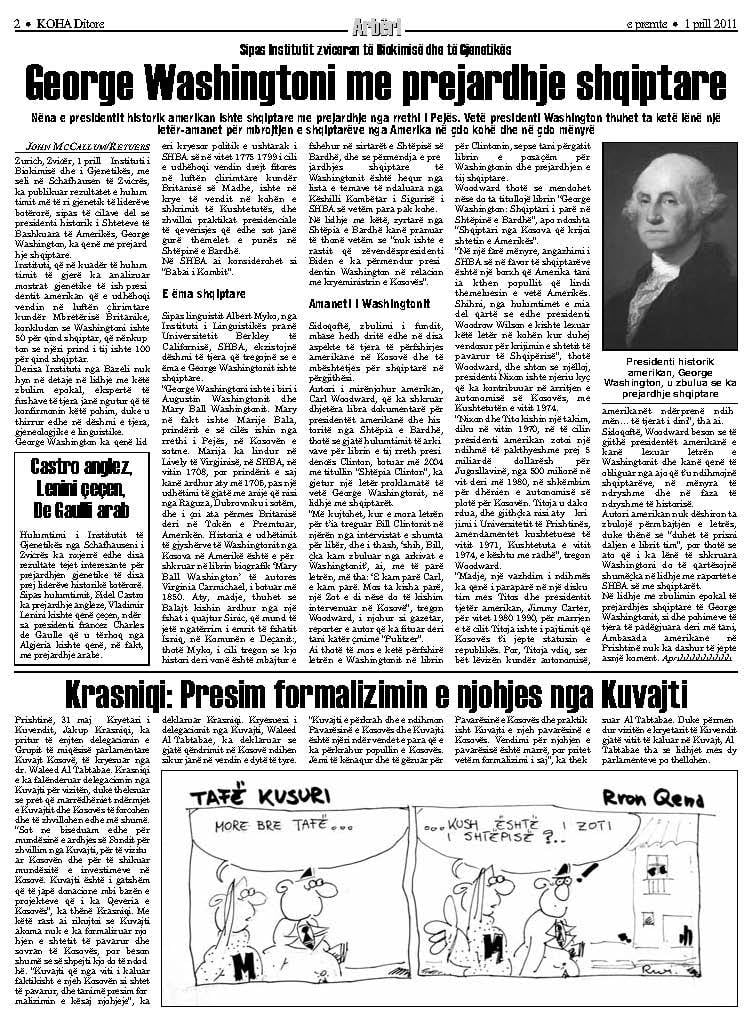
Photo of the news published on April 1, 20211 in the Koha Ditore newspaper
What should you keep in mind when you encounter suspicious content?
Verify the source:
Before sharing or believing any unusual news or information online, you should make sure to verify the source. Even if that content is published to create humor, you should be careful before sharing it, as not everyone can understand humor like you do.
Analyze the content:
Before you believe information or news that seems true, do a quick analysis of the content.
Don't take everything seriously:
Especially for April 1st, "April Fools' Day," many websites and online sources publish false information in the form of jokes. You should keep in mind that this is a special day and not everything should be taken seriously.
Ask for clarification:
If you have doubts about any information or news that has been published, there is nothing wrong with asking for clarification or sharing your doubts with friends and family. Communication is the key to avoiding the “hoaxes” that occur on April 1st and beyond.