

Wrote: Etrit Rexhepi
Cryptocurrency scams around the world are becoming increasingly sophisticated, and Kosovo is not immune to these schemes. One of the most common forms of fraud in this area involves the use of links published in image form as sponsored ads on platforms like Facebook, which have been found published in the past and were handled by hibrid.info (see here, here and here).
These publications, which use images of well-known public figures in Kosovo without their knowledge, displaying fake articles to attract users, are again circulating in the digital sphere.
Hibrid.info has come across some of them (see here, here, here and here), and only yesterday (August 26) handled the last case (see here).
How are they published?
When a user clicks on these widgets, he is directed to pages that mimic the design and style of credible media, such as "Telegrafi.com", "PrishtinaInsight.com" and the Serbian-language "Kossev.info", giving a credible image. and professional. On these pages, a fictitious interview with the public figure featured in the ads is presented, where it is claimed that this person has earned large sums of money by investing in the promoted platform.
In reality, the interview is not real, but is designed to deceive people and induce them to invest in a fake cryptocurrency platform (here).
One such example of this type of fraud is when the image of a well-known public figure from Kosovo is used in an unauthorized manner to promote a fraudulent cryptocurrency platform. The fake articles claim that this figure has been sued by the Central Bank of Kosovo (CBK), creating a fake event to attract readers' attention and make the fake platform look as legitimate as possible.
publisher
These Facebook cryptocurrency scams are often published by pages with a small number of followers and very few or no previous posts (here and here).
The identity of the administrators of these pages remains unknown. The location of these administrators often indicates countries outside of Kosovo.


The police of North Macedonia had identified three suspicious platforms for the trading of cryptocurrencies: "nearstedge," "Bitapp24," and "Immediate codex," which are promoted through fake pages.
This, as part of a wider scheme aimed at European audiences, where ads are tailored to the respective countries, using the names of local celebrities. The traces of these fraudulent sites lead to addresses in the UK, USA and Singapore, and ask for personal data to trade cryptocurrencies (see here).
Çis it known about the "Nearest Edge" platform?
Hibrid.info has researched the "Nearest Edge" platform website, whose name appears in the fraudulent content.
Although the platform appears legitimate, trust ratings from specialized platforms suggest that the trust level of its website is low (see here and here).
Also, no official reaction from "Nearest Edge" has been recorded regarding the frauds that are intended to be carried out in its name, which may further raise doubts about its security.
Based on the review of the Techopedia site, the Nearest Edge platform is claimed to be a cryptocurrency trading robot. This review notes that, while the platform appears to offer legitimate services, there are some concerns over its reliability.
This is due to a lack of transparency and user feedback as well as low reliability ratings from independent sources. If considering using this platform, extra caution and further research is recommended (see here).
The spread of fraud
Apart from Kosovo, frauds in the same form have also spread in Albania, North Macedonia and African countries.
Hibrid.info has found a report showing that in the same way, fraudsters are targeting African journalists through disinformation campaigns on the Meta (Facebook) platform.
These fraudsters have used similarly sophisticated tactics to spread false information by creating websites that appear to be legitimate (see here).


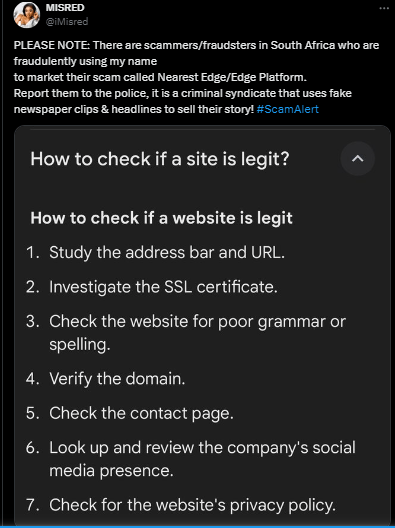


Hibrid.info has not been able to determine exactly the reasons why these forms of fraud have circulated in the mentioned countries, but it has discovered some methods that are used for their realization.
Cryptocurrency scams include various methods to defraud victims, including investment scams, where fraudsters pretend to be investment managers and disappear with victims' funds; "pump and dump" scheme, where the value of a cryptocurrency or NFT is artificially increased to deceive investors; romance scams through dating platforms; phishing to steal credentials; Ponzi scheme, where new funds are used to pay high interest; and scams with cryptocurrency mining, and that mining does not actually exist.
Indicators of scams include promises of high returns with low risk and secret strategies (see here).
On May 3 of this year, the Kosovo Police published a communique warning citizens about suspected online fraud through investments. In the communique, the ways of carrying out these frauds were clarified and protection tips were offered. The police also called on citizens to report fraud cases to the nearest police station, if they are victims of these frauds (see here).